
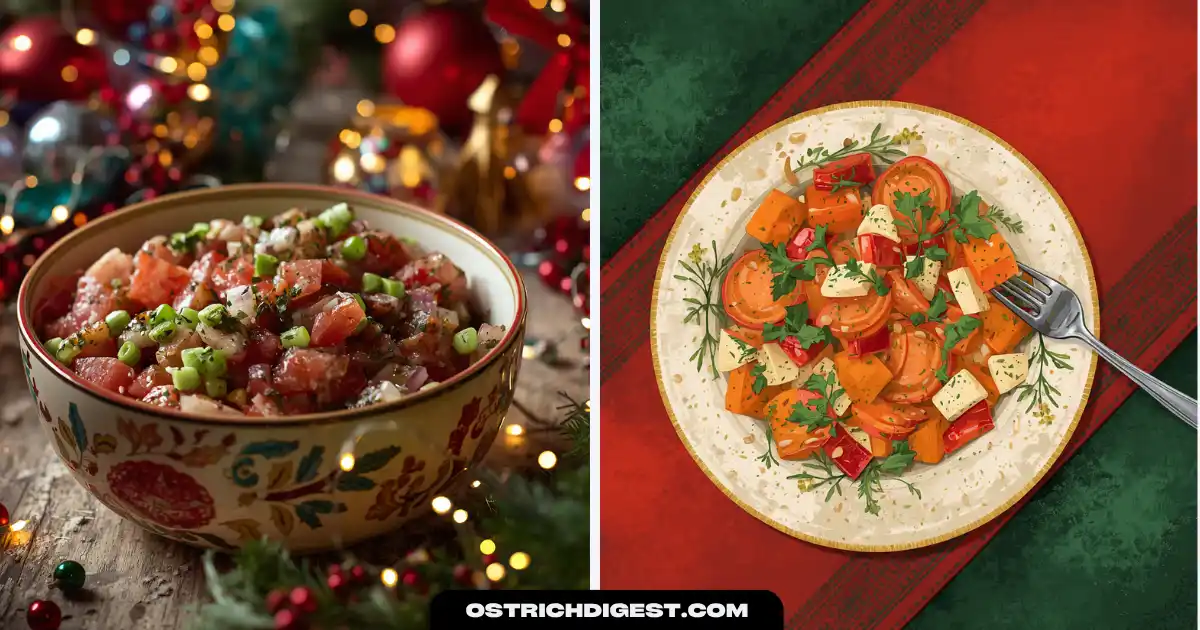
A dish that traveled from a secretive Moscow restaurant kitchen in the 1860s to Christmas tables across three continents deserves more than a cursory Google search. If you have been hunting for the best ensalada rusa navidad near me, you are looking for something that carries real culinary history, cultural memory, and the kind of creamy, cold-weather comfort that no other holiday salad quite delivers.
How Did a Russian Salad Become the Star of Christmas Tables Worldwide?
The story begins in imperial Moscow. In the 1860s, Belgian chef Lucien Olivier crafted the original Russian potato salad at the Hermitage Restaurant in Moscow. He never shared his secret recipe, but copycat versions arose. Those early versions were lavish. As a recipe emerged, it included relatively rare or expensive ingredients at the time like caviar, crayfish, and cornichons.
Over the following decades, the salad traveled westward across Europe and into Latin America. Russian immigrants brought the salad to Argentina, Costa Rica, Peru, and Mexico, and over the years each country adapted the recipe to its local ingredients. Consequently, a dish born in the Russian imperial dining scene became one of the most democratic holiday staples on earth.
It is served as a festive side dish at Christmas just like in Russia, the country of its origin, making it a dish that has genuinely kept its holiday identity across cultures.
What Makes Ensalada Rusa Navidad Different From an Everyday Version?
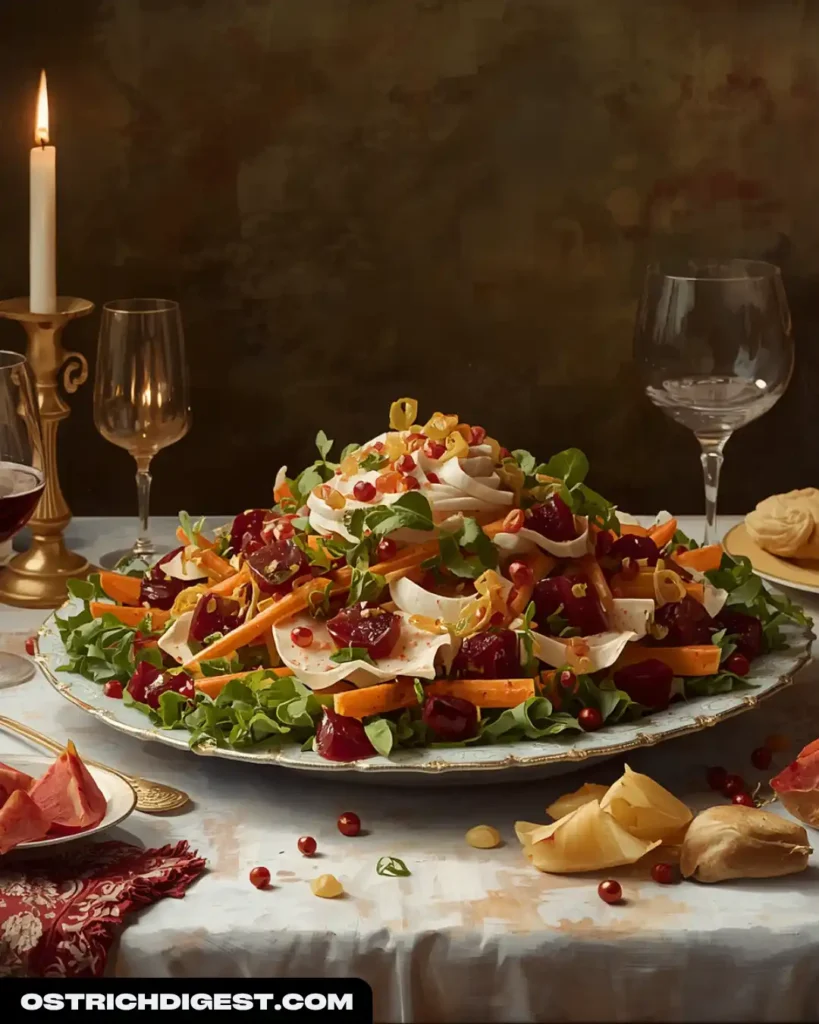
The dish itself does not change dramatically at Christmas, but the context and presentation do. Ensalada rusa cannot be left out of Christmas and New Year’s feasts, and it is a favorite at parties, parrilladas, and family gatherings across many Latin American countries. During Navidad, cooks often prepare larger quantities, decorate the top with roasted peppers, olives, or hard-boiled egg slices, and serve the salad as a centerpiece rather than a secondary side.
Furthermore, the ingredients skew toward freshness and quality during the holiday season, when families invest more care in every dish on the table. The foundation of the salad remains constant: a mayonnaise-based preparation featuring cubed carrots, peas, boiled eggs, tuna, onions, and black olives that holds season tickets on dinner tables from Peru to Madrid.
What Does an Authentic Version Actually Taste Like?
The flavor is mild and comforting, with the creamy mayonnaise providing a luscious base that allows the natural sweetness of the carrots and peas to shine through. The potatoes add a satisfying heartiness, while the occasional tang of vinegar or mustard cuts through the richness, keeping the dish light and refreshing. That balance of richness and brightness is exactly why families return to it every December.
How Do Regional Versions Differ, and Which Should You Seek Out?
Understanding regional variation helps you know what to expect when you search for this holiday salad near you. The Spanish, Latin American, and Eastern European interpretations diverge in meaningful ways.
| Region | Core Ingredients | Notable Additions | Typical Occasion |
|---|---|---|---|
| Spain | Potato, carrot, peas, tuna, mayo | Olives, roasted peppers, shrimp (south) | Tapas bars, Christmas Eve |
| Argentina | Potato, carrot, peas, mayo | Italian immigrant influences, sometimes ham | Christmas, New Year’s |
| Dominican Republic | Potato, carrot, eggs, peas, mayo | Corn, apple cider vinegar-soaked onion, optional beets | Christmas, all celebrations |
| Peru | Potato, carrot, peas, mayo | Beets for color, simple preparation | Holiday meals, family gatherings |
| Guatemala | Potato, carrot, green beans, peas | Mustard dressing, herbs | Christmas, barbecues |
| Russia/Eastern Europe | Potato, egg, carrot, pickles, peas | Cold cuts, no tuna | New Year’s Eve |
The Spanish version typically includes potatoes, peas, carrots, and tuna, with southern variations also including shrimp and hard-boiled eggs. Meanwhile, the Peruvian version is usually simple with potatoes, carrots, and peas but has a bright color from beets, while the Persian salad Olivieh includes eggs, pickled cucumbers, carrots, and peas.
Where Should You Actually Look for the Best Ensalada Rusa Navidad Near Me?
Searching the phrase “best ensalada rusa navidad near me” on Google Maps or Yelp is a useful start, but knowing where to look specifically makes the difference between a mediocre jar of pre-made salad and a genuinely memorable dish.
Spanish and Latin American Restaurants
The most reliable source for an authentic holiday version is a family-owned Spanish or Latin American restaurant that actually puts this dish on its Christmas menu. Look for restaurants that describe themselves as Peruvian, Dominican, Spanish tapas, Cuban, Argentinian, or Venezuelan. During the holiday season, many add ensalada rusa to their catering and pre-order menus even if it does not appear year-round.
Latin Grocery Stores and Delis
Many Latin supermarkets prepare house-made ensalada rusa in their deli section, particularly in the weeks leading up to Christmas. The quality at a well-run neighborhood deli often rivals restaurant versions because the staff preparing it learned the recipe at home, not from a culinary school manual.
Catering Operations and Home Cooks
Word of mouth still works remarkably well for this dish. Ask in local Facebook community groups or neighborhood apps whether anyone takes orders for holiday ensalada rusa. Home cooks who prepare it for their own families frequently take small orders during the season, and their versions often carry the most authentic regional character.

What Signals a High-Quality Ensalada Rusa Worth Buying?
Once you have found a candidate source, a few quality indicators help separate genuinely good preparations from rushed or low-quality ones. Freshness is the single most important factor.
Good quality mayonnaise is a top priority because it dictates much of the taste and texture of the salad. The best potato choice is waxy varieties such as Yukon Gold, which do not turn too mushy when boiled and diced. If a vendor uses floury potatoes that fall apart into a paste, the texture will suffer noticeably.
Additionally, the salad should be served cold. It is traditionally served chilled, which enhances its texture and flavor, and the freshest versions are prepared daily rather than in large batches days in advance. Ask when the batch was made. A good vendor will answer without hesitation.
Red Flags to Avoid
Watery dressing, grey potato edges, or an overwhelming mayonnaise-to-vegetable ratio all suggest the salad was made too far in advance or with low-quality ingredients. Similarly, overly uniform cubes from a commercial cut suggest industrial preparation rather than hand-crafted technique. A well-made version should have slight variation in the vegetable cuts and a dressing that coats every piece without pooling at the bottom of the container.
Should You Order Ahead or Make It at Home?
For Christmas entertaining, ordering ahead is almost always the smarter move. Holiday demand is high, and the best local sources sell out days before Christmas Eve. Call or message your chosen vendor at least a week in advance to confirm availability, minimum order sizes, and whether the salad can be collected fresh on December 23rd or 24th.
However, making ensalada rusa navidad at home remains one of the most rewarding holiday kitchen projects. Using fresh vegetables results in a much better texture, and frozen peas work well since fresh peas are seasonal. The preparation requires no special equipment, and the result improves significantly when the finished salad chills overnight, allowing the dressing to permeate every ingredient fully.
The salad is best made a few hours ahead so it chills and sets. It keeps refrigerated in an airtight container for up to 3 days, making it an ideal make-ahead dish for Christmas entertaining. It does not freeze well, so plan quantities carefully.
The Cultural Weight of a Dish That Refuses to Disappear
Few holiday dishes have traveled as far or adapted as freely as this one. Also known as Olivier salad for its eponymous creator, ensalada rusa holds season tickets on dinner tables from Peru to Madrid, and Mongolia to Tehran. That geographic sweep is a testament to the dish’s fundamental appeal: it is simple, affordable, deeply satisfying, and infinitely customizable.
Indeed, the fact that a Belgian chef’s closely guarded Moscow restaurant recipe eventually became the centerpiece Christmas salad of millions of Latin American families is one of the more quietly remarkable stories in culinary history.
The best ensalada rusa navidad near me is ultimately the one made with the freshest ingredients, the most care, and the deepest connection to the cook’s own holiday tradition. Whether you find it at a neighborhood deli, a Spanish restaurant, or a home cook’s kitchen, look for those qualities above all else.
Frequently Asked Questions
What is ensalada rusa navidad?
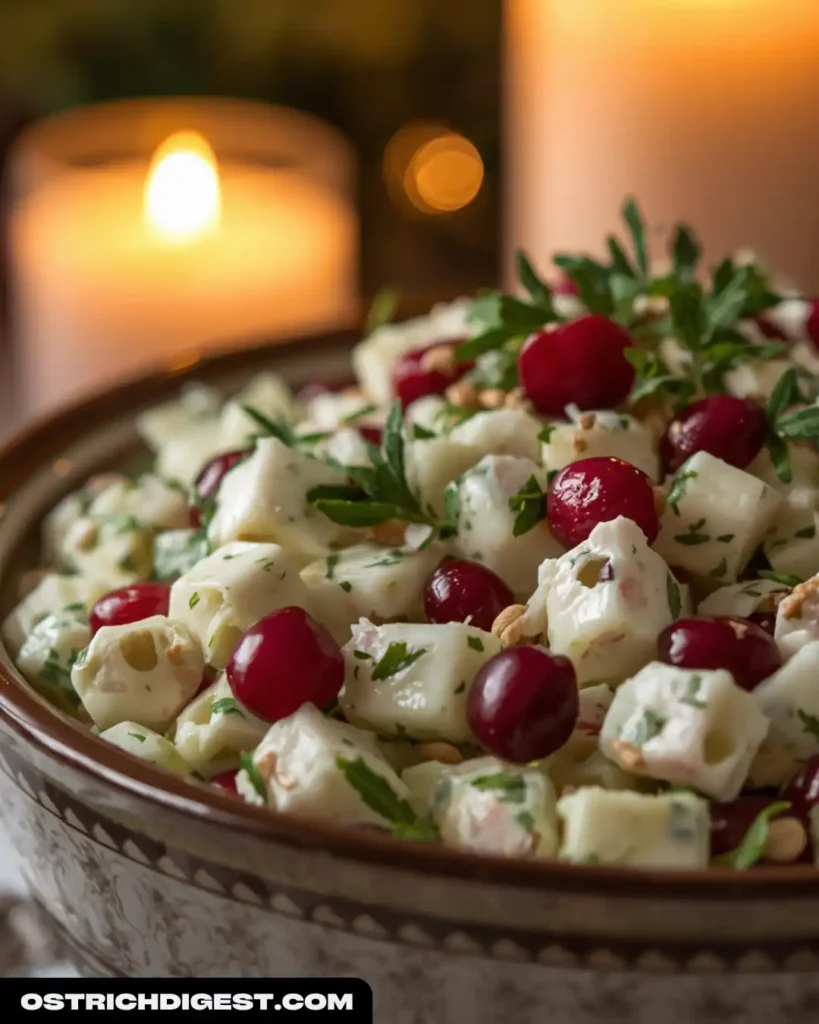
It is a creamy, chilled potato salad traditionally served at Christmas across Spain, Latin America, and many multicultural communities, made with potatoes, carrots, peas, eggs, and mayonnaise, often with tuna and olives.
Why is it called Russian salad if it is served at Latin American Christmas?
The name comes from its origin in 1860s Moscow, where chef Lucien Olivier created the dish. Russian immigrants and later Spanish colonizers spread it to Latin America, where it became deeply embedded in holiday traditions.
What is the difference between ensalada rusa and ensaladilla rusa?
They are the same dish. “Ensaladilla rusa” is the Spanish diminutive form meaning “little Russian salad,” commonly used in Spain, while “ensalada rusa” is the more common term across Latin America.
Can I find ensalada rusa navidad at a regular grocery store?
Some large Latin supermarkets carry it in their deli sections during the holiday season, but quality varies widely. A specialty Latin grocery or restaurant typically offers a superior freshly made version.
How far in advance should I order ensalada rusa for Christmas?
Ordering at least one week before Christmas Eve is advisable, as holiday demand at quality vendors is high and pre-orders fill quickly in the two weeks before Christmas.
Does ensalada rusa navidad always include tuna?
No. The Spanish version typically includes tuna, but many Latin American versions, including Guatemalan and Dominican preparations, omit it. The only universally consistent ingredients are potatoes, carrots, peas, and mayonnaise.
How long does homemade ensalada rusa last in the refrigerator?
Stored in an airtight container, it keeps well for up to three days. The flavor actually improves after several hours of chilling, making it an excellent make-ahead dish.
Can ensalada rusa be frozen?
No. Freezing ruins the texture of the boiled potatoes and eggs, and the mayonnaise dressing breaks down poorly. It should always be prepared fresh and kept refrigerated.
What proteins can be added to ensalada rusa navidad?
Canned tuna is the most common addition in Spanish and many Latin American versions. Shrimp, ham, crab, or chicken also appear in regional variations, particularly for holiday presentations where a more elaborate version is desired.
What do you serve with ensalada rusa at Christmas?
It pairs naturally with roast pork, pernil, roast chicken, cold cuts, crusty bread, or as part of a larger spread of holiday appetizers. In Spain it is classically served alongside tapas with chilled white wine or beer.
Read about Melissa Esplana