
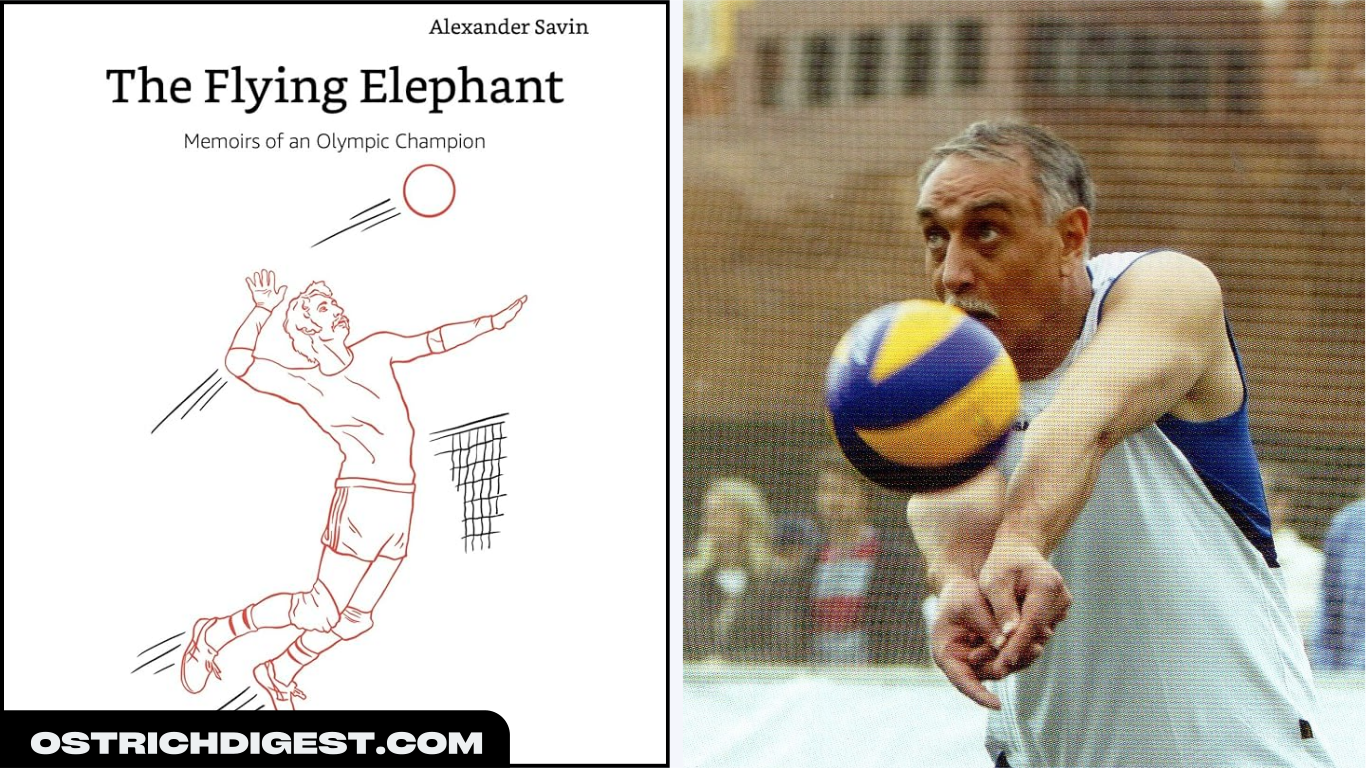
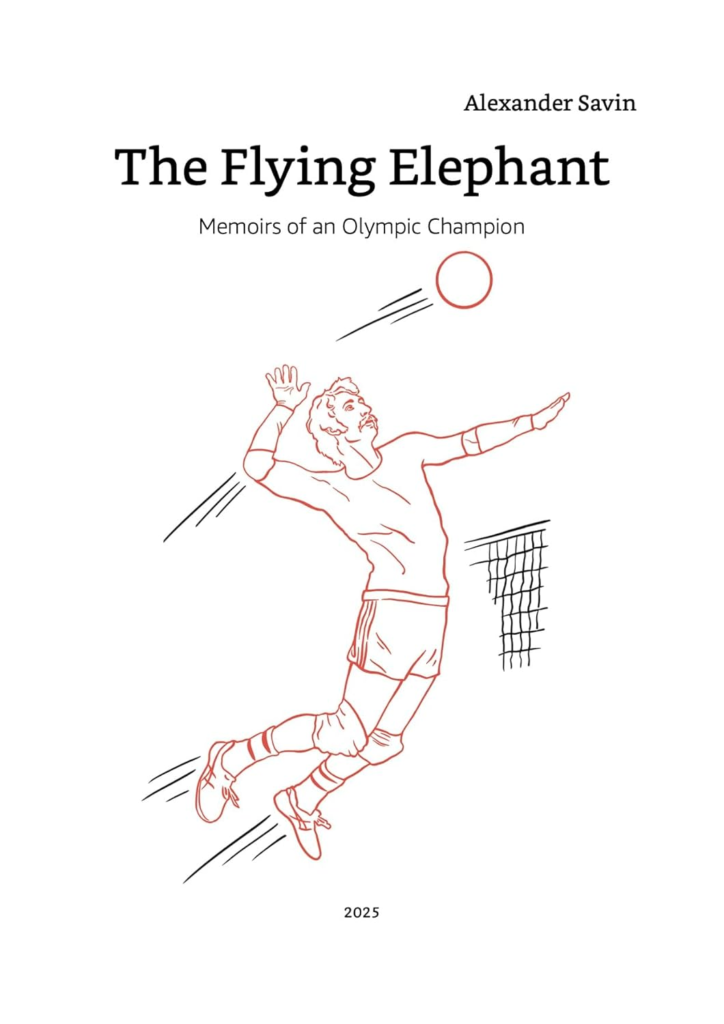
Some sports books are victory laps disguised as memoirs. They follow a familiar and predictable formula — talented athlete emerges, overcomes obstacles, wins big, expresses gratitude, and wraps everything up neatly. The flying elephant memoirs of an olympic champion kindle edition alexander savin is emphatically not that book.
Published on October 26, 2025, as a Kindle edition on Amazon, this 514-page memoir tells the unfiltered story of one of volleyball’s greatest players — a man who won silver at the 1976 Montreal Olympics, gold at the 1980 Moscow Olympics, and earned the unforgettable nickname The Flying Elephant from the Italian sports press. However, what truly sets this book apart is not the medals it describes. It is the remarkable honesty with which Savin describes everything that happened between them — and everything that happened after.
In this article, we cover everything you need to know about The Flying Elephant Memoirs of an Olympic Champion Kindle Edition by Alexander Savin. We explore who Alexander Savin is, where his iconic nickname came from, what the memoir contains, how the Kindle edition works, the historical context behind the book, and why it continues to attract growing reader interest in 2025 and 2026.
Let us start from the very beginning.
Who Is Alexander Savin? The Man Behind the Memoir
Before exploring the book itself, understanding who Alexander Savin is and what he achieved makes every chapter of the memoir significantly more powerful.
Born in Taganrog, 1957
Alexander Savin was born on July 1, 1957, in Taganrog — a city in the Rostov region of Russia, located on the northeastern shore of the Sea of Azov. Taganrog is a city with a rich cultural history — it is also the birthplace of Russian playwright Anton Chekhov. Growing up there, Savin showed early signs of the physical gifts that would eventually make him one of the most dominant volleyball players of his generation.
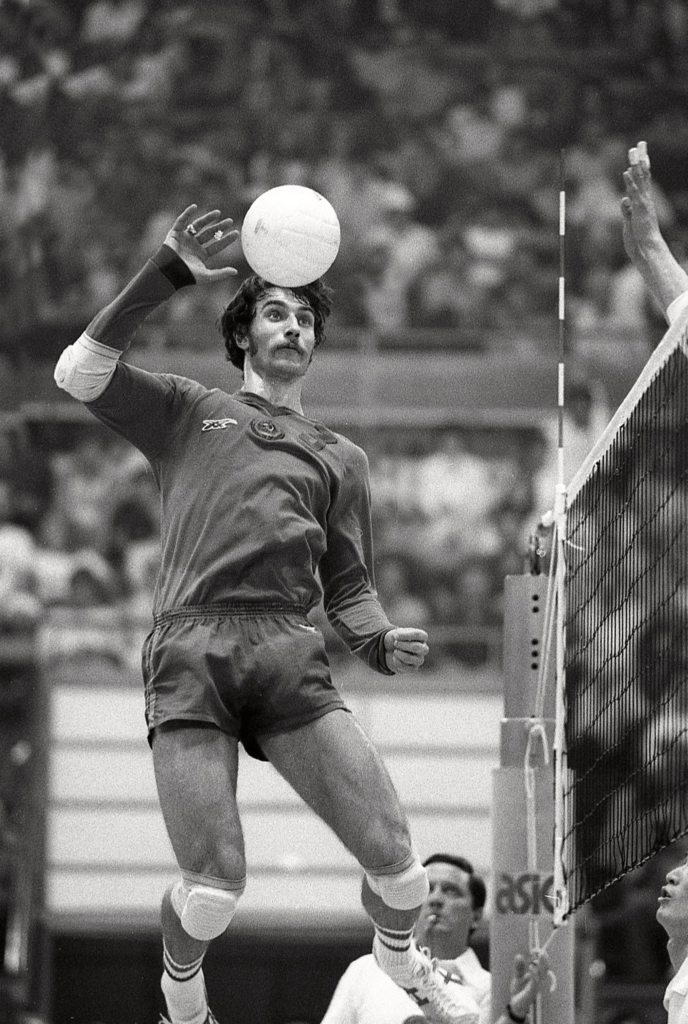
He grew to be an imposing physical presence. His standing reach measured 300 centimetres. His vertical jump reached 92 centimetres. Together, those two measurements gave him a peak jump reach of 392 centimetres — an extraordinary number that made him virtually unstoppable as a middle blocker at the volleyball net. Furthermore, he combined that physical dominance with technical precision and a deep understanding of the game that set him apart from players who relied on physical gifts alone.
The Soviet Volleyball System
Savin came of age within the Soviet Union’s elite sports system — one of the most demanding, disciplined, and systematically successful athletic development programmes in history. The Soviet volleyball programme, in particular, was a global powerhouse throughout the 1970s and 1980s. By joining that system as a young player, Savin entered an environment of extraordinary expectations, intense training, and collective performance culture that would shape everything he became.
That system was not built on individual glorification. Instead, it operated as a collective machine — one where every player’s contribution mattered and where personal ego was deliberately subordinated to team performance. As a result, Savin’s entire athletic identity was formed within a framework that valued the group over the individual. That value system shows up clearly throughout the memoir.
Olympic Career and Major Achievements
Savin’s competitive career produced an extraordinary array of achievements at the highest levels of international volleyball.
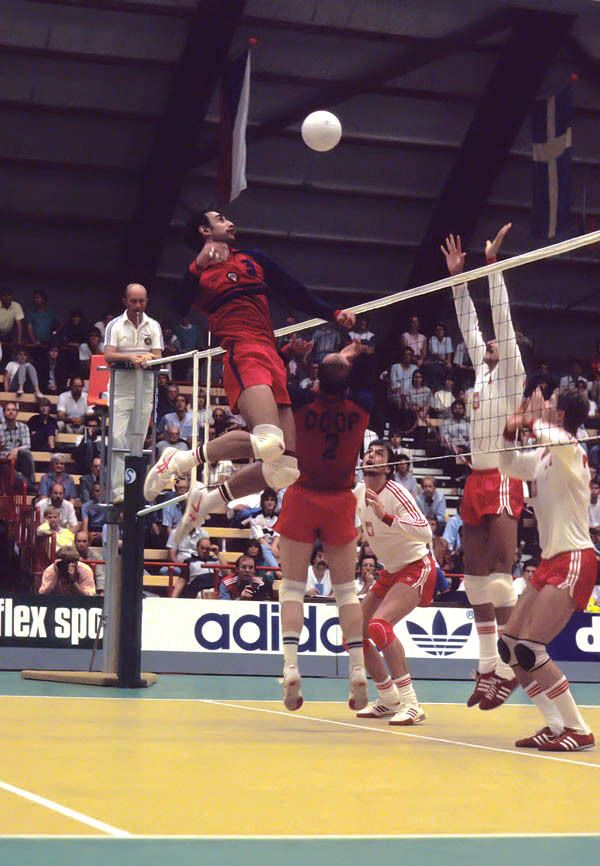
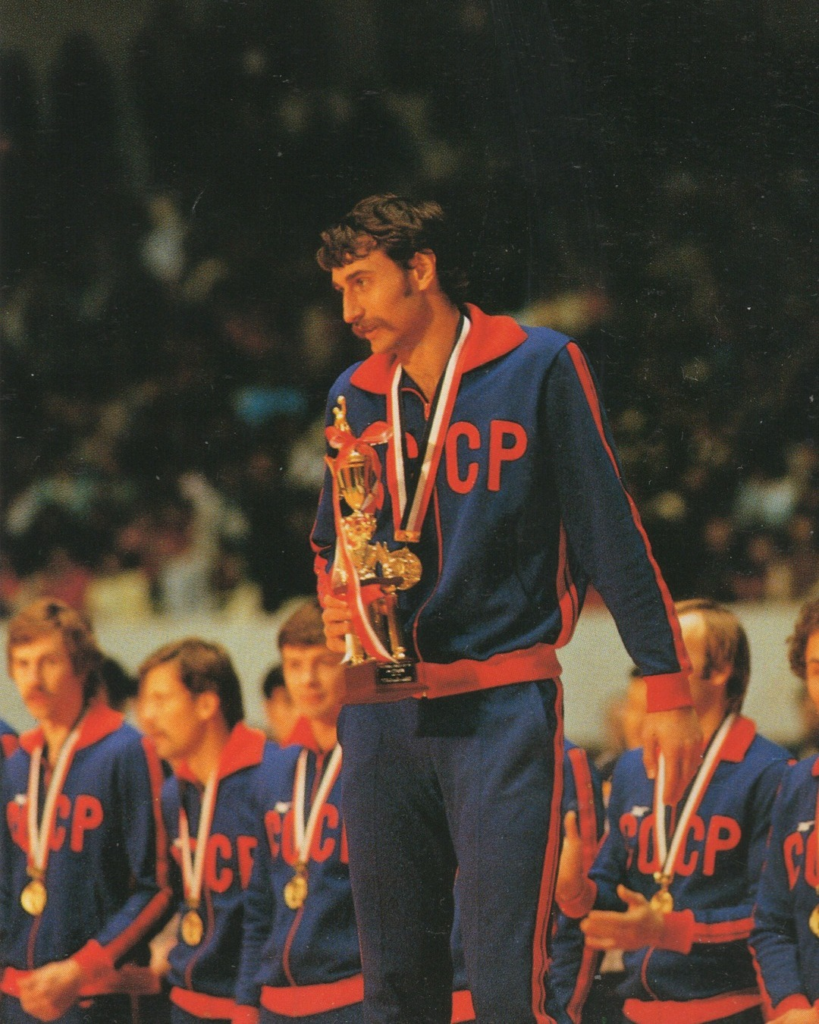
At the 1976 Montreal Olympics, he competed as part of the Soviet national team and won the silver medal. Four years later, at the 1980 Moscow Olympics — held in his home country, under enormous political pressure due to the US-led boycott — he helped lead the Soviet team to the gold medal. That gold medal arrived in one of the most politically charged Olympic environments in history, giving it a weight that extended far beyond sport alone.
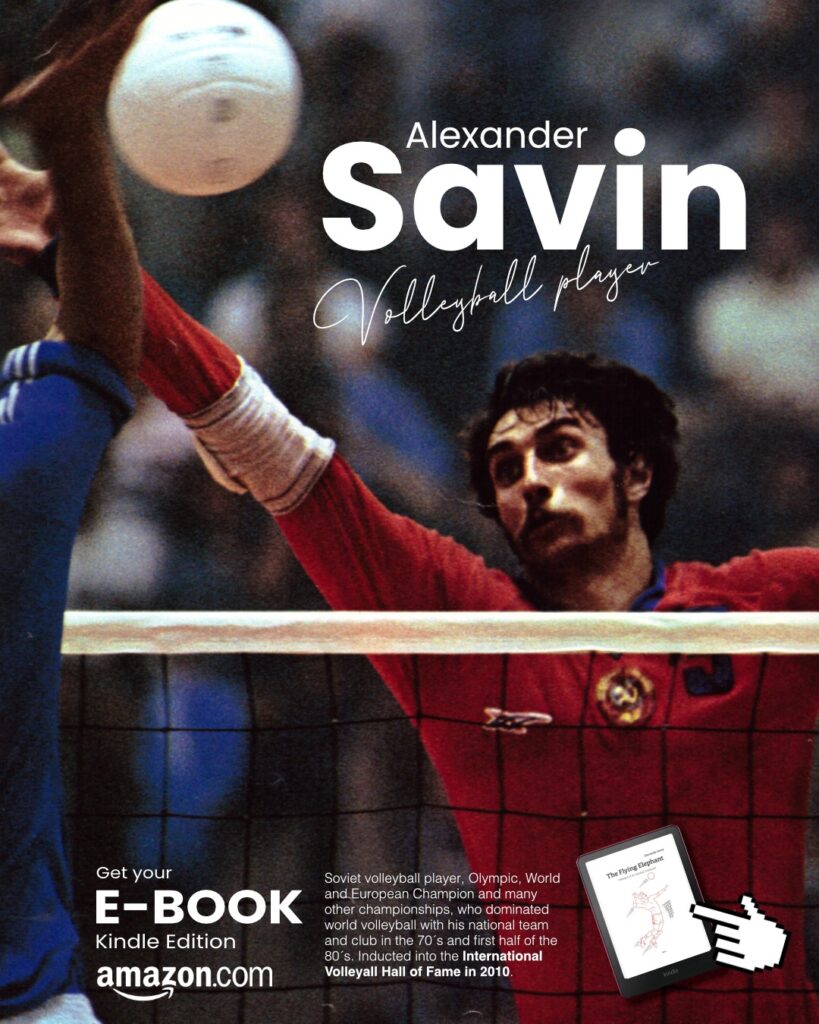
Beyond the Olympics, Savin accumulated an extraordinary collection of major titles. He won six consecutive World League championship titles — in 1975, 1977, 1979, 1981, 1983, and 1985. In recognition of his lifetime contribution to the sport, he was inducted into the International Volleyball Hall of Fame — the ultimate honour for any player in the global game.
The Flying Elephant: The Story Behind the Nickname
The title of the memoir is one of the most memorable and intriguing in recent sports literature. Understanding where it came from adds important depth to the whole reading experience.
The Italian Sports Press Bestows a Legend
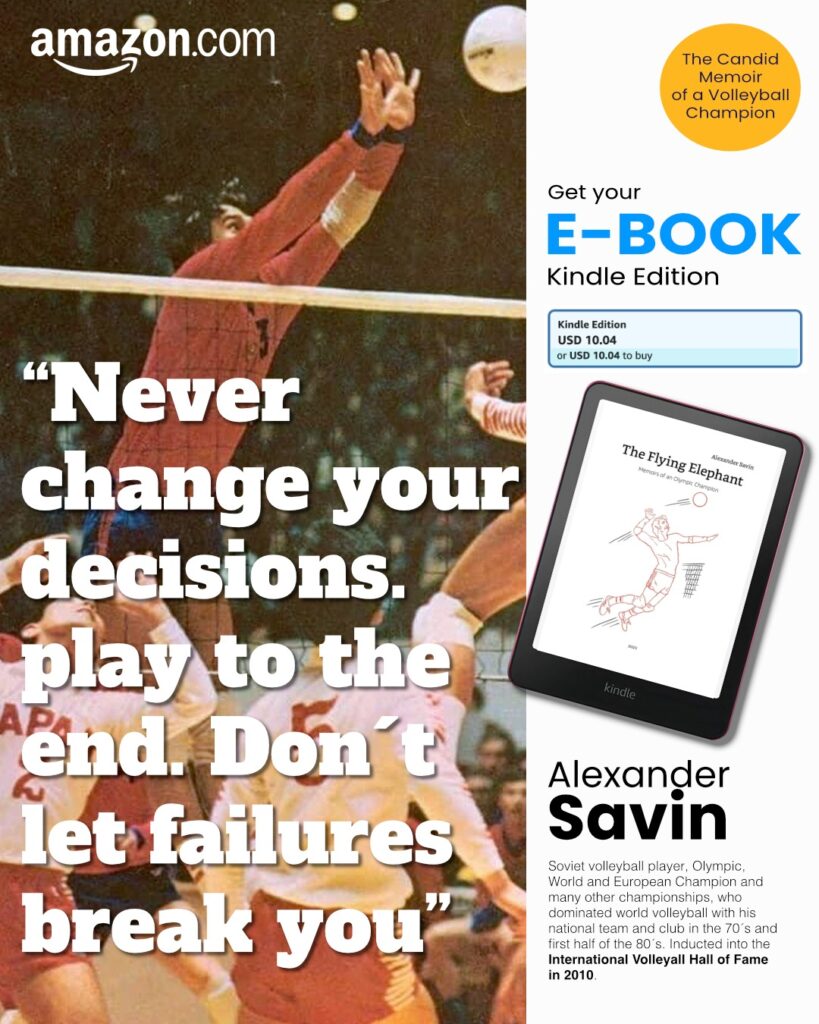
The nickname The Flying Elephant was given to Savin by the Italian sports publication La Gazzetta dello Sport — one of the most prestigious sports newspapers in the world. The name perfectly captured the apparent contradiction at the heart of his playing style.
An elephant, in most people’s imagination, represents size, weight, and ground-level power. Flying, by contrast, represents lightness, elevation, and transcendence. Together, those two seemingly contradictory ideas described exactly what Savin did on a volleyball court. He was a physically imposing man who moved and jumped with a grace and explosiveness that defied his stature. He appeared, to opponents and spectators alike, to defy what his body should have been able to do.
The Symbolic Depth
Beyond the immediate sporting context, the phrase carries rich symbolic meaning that resonates throughout the entire memoir. Symbolically, elephants often represent strength, endurance, and stability, while flying represents freedom, transcendence, and breaking limitations. Together, the phrase may symbolise achieving what once seemed impossible.
That symbolism mirrors the broader Olympic journey itself — overcoming obstacles, surpassing expectations, and pushing beyond perceived physical and psychological limitations through relentless determination and sacrifice. As a title for his memoir, it works on multiple levels simultaneously. It describes his physical playing style. It captures the spirit of his career. And it speaks to the universal human desire to transcend our apparent limitations.
What Is Inside the Memoir? A Full Content Overview
With 514 pages and over 240 rare photographs, The Flying Elephant is a substantial and richly detailed book. Understanding what it contains helps readers decide whether it is right for them.
The Structure and Narrative Arc
The memoir covers Alexander Savin’s full journey — from his early years as a young athlete growing up in Taganrog to his peak on the Olympic stage and everything that came after his playing career ended. Rather than following a purely chronological structure, the book weaves between timeline and reflection — allowing Savin to provide context and meaning for events as he describes them.
Importantly, the narrative does not follow the predictable sports memoir formula. The memoir does not focus only on victories. In fact, what makes it stand out among sports biographies is that Savin is willing to talk about doubt, failure, pressure, and the personal costs of chasing greatness. He reflects on his mentors, teammates, and the athletes who have often been overlooked or forgotten by mainstream sports history.
That last point is one of the memoir’s most distinctive and admirable qualities. For a book written by an Olympic champion, The Flying Elephant spends a remarkable amount of time honouring the people around Savin rather than elevating Savin himself. His teammates, his coaches, the support staff who made the Soviet programme function — he names them, describes them, and positions them as essential contributors rather than peripheral footnotes.
The Soviet Training System Revealed
One of the most historically valuable sections of the memoir is Savin’s detailed account of what training and competing within the Soviet sports system actually felt like from the inside.
The training demands of the Soviet system were not romantic. Long sessions, exacting standards, intense scrutiny, and the particular pressure of performing for a country that treated athletic success as ideological proof — Savin describes the daily reality of that system without either glorifying it or condemning it in retrospect. That balanced, honest account gives the memoir genuine historical value beyond its personal narrative.
Readers interested in Cold War history, Soviet culture, or the broader politics of Olympic sport will find substantial material in these sections that extends well beyond volleyball itself. The 1980 Moscow Olympics, in particular, is described with the nuance and context that only an eyewitness participant could provide.
The 1980 Moscow Olympics: A Political Backdrop
The political context surrounding the 1980 Moscow Olympics adds enormous dramatic weight to Savin’s account of that gold medal victory. The United States had announced a boycott of the Games in protest against the Soviet invasion of Afghanistan. Over 60 countries ultimately joined that boycott, significantly reducing the field of competition.
That context created a complicated legacy for the Soviet athletes who competed in Moscow. Their victories were genuine — achieved through years of sacrifice and preparation. Yet critics argued that the boycott diminished the competitive significance of the medals. Savin addresses this directly and honestly, without defensiveness or easy patriotism. His account of what it actually felt like to compete and win in that charged environment is one of the memoir’s most powerful and revealing passages.
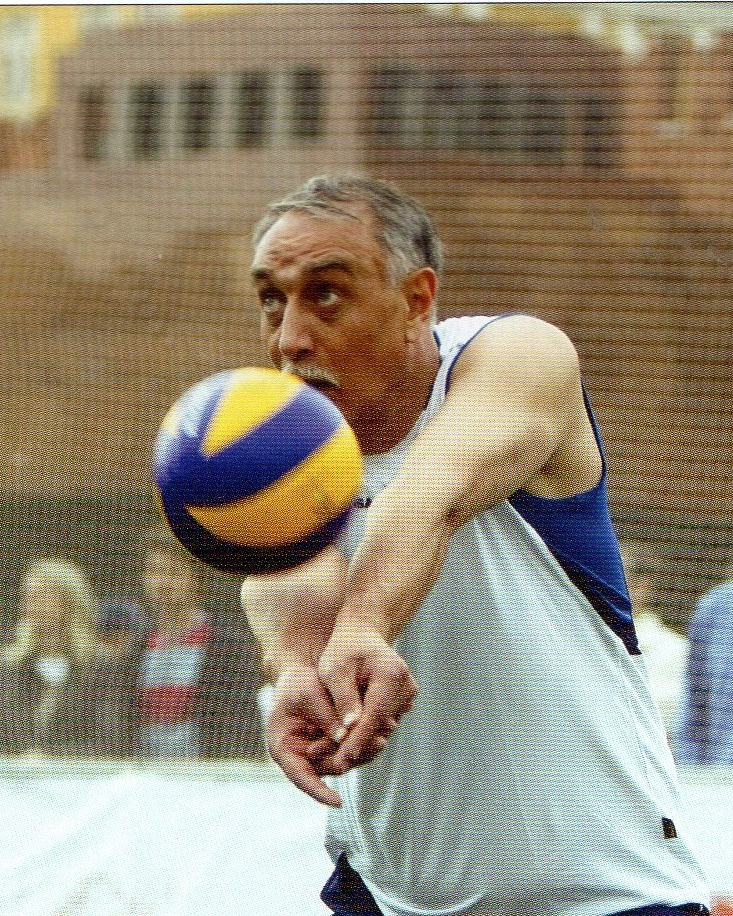
The Flying Elephant Kindle Edition: Book Details and Attributes Table
| Attribute | Details |
|---|---|
| Full Title | The Flying Elephant: Memoirs of an Olympic Champion |
| Author | Alexander Savin |
| Editor and Translator | Andrei Savine |
| Co-Editor | Julia Savine |
| Introduction | Peter Murphy |
| Co-Translator | Alfredo Cabero |
| Format | Kindle Edition (also available in hardcover and paperback) |
| Publication Date | October 26, 2025 |
| Pages | 514 pages |
| File Size | 68.8 MB |
| Photographs | Over 240 rare photographs from private and public archives |
| Amazon ASIN | B0FXVDWW16 |
| Kindle Unlimited | Eligible for Kindle Unlimited membership |
| Language | English |
| Subject Categories | Biographies and Memoirs; Sports and Outdoors; History |
| Alexander Savin Born | July 1, 1957, Taganrog, Rostov region, Russia |
| Olympic Medals | Silver — 1976 Montreal Olympics; Gold — 1980 Moscow Olympics |
| World League Titles | Six consecutive (1975, 1977, 1979, 1981, 1983, 1985) |
| Hall of Fame | International Volleyball Hall of Fame inductee |
| Nickname | The Flying Elephant — coined by La Gazzetta dello Sport |
| Physical Stats | Standing reach 300cm; Vertical jump 92cm; Peak jump reach 392cm |
The 240 Photographs: A Visual Journey Through Volleyball History
One of the most distinctive features of The Flying Elephant memoir is its extraordinary photographic content. Most sports memoirs include a small insert of photographs, usually a dozen or two pages of black-and-white images. This book is dramatically different.
Rare Images From Private Collections
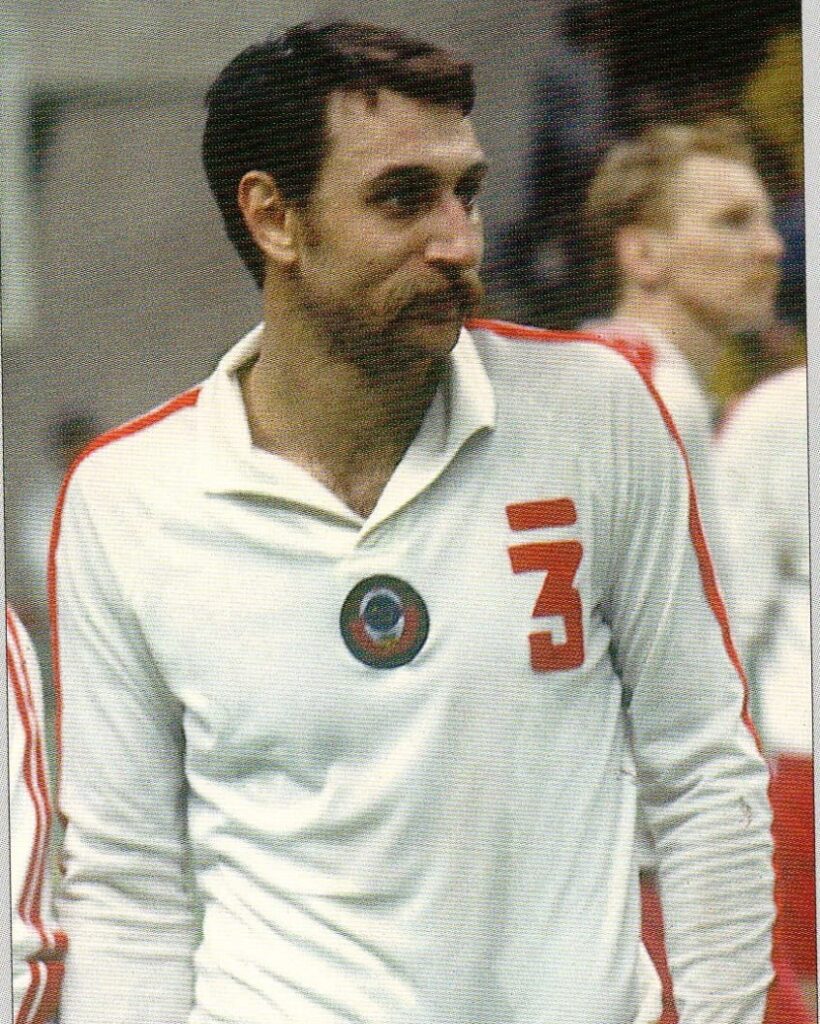
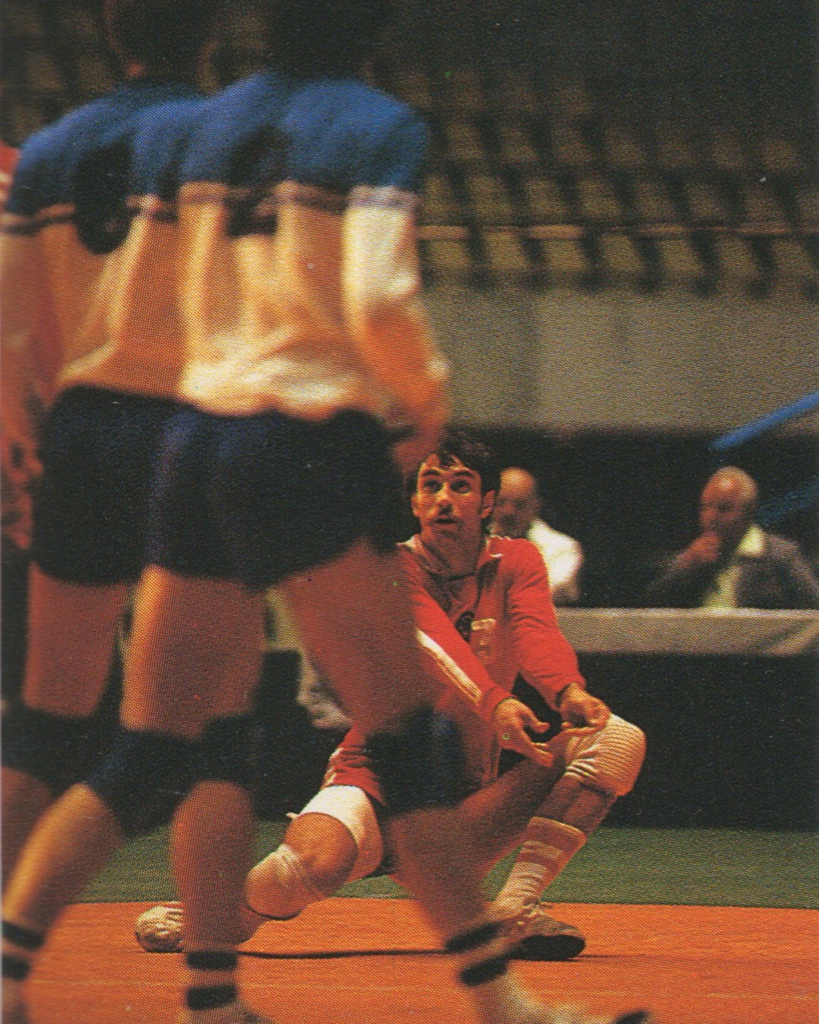
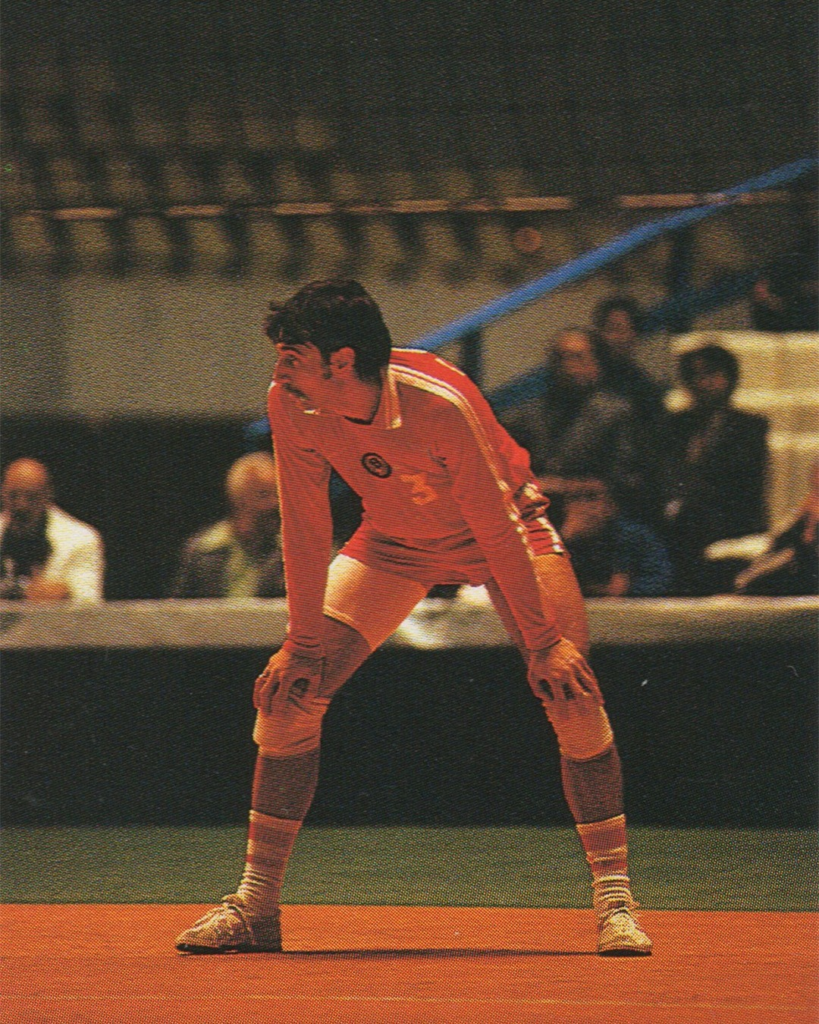
The Kindle edition includes over 240 rare photographs drawn from private family collections and public archives. These images span five decades of volleyball history and provide readers with unprecedented visual access to a world that has rarely been documented so richly in English.
The photographs cover training camps in snow and sunshine, locker room celebrations, Olympic competition moments, intimate private gatherings with legendary players, and behind-the-scenes images from a career lived at the very highest level of international sport. Many of these images have never been seen by English-speaking audiences before. Several come directly from Savin’s personal family archives — making them genuinely unique historical documents.
The Practical Reading Consideration
Given the 240 photographs and the 68.8 MB file size, the Kindle app on a tablet or larger phone screen gives the best reading experience for the images. Standard Kindle e-ink devices display them in greyscale, which is adequate but loses colour information. The text itself reads well on any Kindle device.
That practical consideration is worth noting for anyone planning to purchase the book. The memoir is a richly visual experience as well as a literary one. Consequently, maximising the visual quality of the photographs significantly enhances the overall reading experience. A tablet, laptop, or large-screen smartphone is therefore the recommended reading platform.
The Kindle Edition: Why Digital Works for This Memoir
The decision to release The Flying Elephant as a Kindle edition was a strategically sound one. Understanding why helps explain the book’s growing global readership.
Accessibility Across the World
Many readers searching for The Flying Elephant Memoirs of an Olympic Champion Kindle Edition Alexander Savin specifically want the digital format because it removes all geographical barriers to access. The book can be purchased and downloaded instantly on any Amazon regional store worldwide. There are no shipping costs, no delivery delays, and no stock availability issues.
That global accessibility is particularly significant for a memoir about Soviet volleyball history — a subject that has passionate readers across Russia, Eastern Europe, Western Europe, North and South America, and increasingly across Asia. Digital distribution allows the book to reach every one of those audiences simultaneously.
Features That Enhance the Reading Experience
The Kindle format offers specific practical advantages that complement the memoir’s content particularly well. Readers can bookmark specific reflections or passages that resonate personally. The search function allows easy navigation back to specific people, events, or themes. The highlighting feature lets readers mark key insights for later reference.
This matters because The Flying Elephant contains sections that feel more philosophical than purely narrative. Some readers may want to revisit specific reflections on discipline, mental preparation, or collective achievement multiple times. The Kindle format makes that kind of engaged, returning readership effortless.
Word Wise and Reading Aids
The Kindle edition is Word Wise enabled — meaning simplified definitions appear automatically above difficult words for readers whose first language is not English. That feature makes the memoir more accessible to the international audience that Savin’s story naturally attracts. Furthermore, the book works with Kindle’s text-to-speech function, allowing readers to listen to the memoir during commutes, workouts, or other activities.
The Themes of the Memoir: What The Flying Elephant Is Really About
Beyond the biographical facts and sporting achievements, The Flying Elephant explores a set of universal themes that give it relevance far beyond volleyball fans.
Discipline and Consistency
Perhaps the most pervasive theme throughout the memoir is the relationship between discipline and long-term success. The book shows that consistency and discipline are key factors in achieving lasting success. Savin does not present discipline as an abstract virtue — he shows it in the specific, daily reality of Soviet training regimes, in the repetitive practice of fundamental skills, and in the cumulative effect of showing up completely every single day for decades.
That message resonates far beyond sport. Entrepreneurs, artists, students, and professionals who read the memoir find immediate application for Savin’s insights about the relationship between daily commitment and extraordinary outcomes. Consequently, the book has attracted a readership that extends well beyond traditional sports autobiography audiences.
Mental Strength and Psychological Resilience
The memoir gives unusually detailed attention to the psychological demands of elite competition. Savin openly discusses self-doubt, fear of failure, and life after the spotlight ends. That psychological honesty is rare in sports memoirs, where authors often prefer to project an image of unshakeable confidence rather than acknowledging the inevitable internal battles that accompany high-stakes performance.
By contrast, The Flying Elephant treats mental strength as something that must be actively developed and maintained — not a quality that elite athletes simply have by default. That perspective gives readers a more honest and ultimately more useful understanding of what psychological resilience actually involves in practice.
Teamwork and Collective Achievement
A recurring and particularly powerful theme throughout the memoir is the fundamental importance of teamwork in achieving shared goals. As a volleyball player — competing in a six-person team sport — Savin was structurally embedded in a collective performance framework from the very beginning of his career.
However, his commitment to that framework goes beyond the structural. He consistently credits teammates, coaches, and support staff as essential contributors to everything he achieved.
Failure as Part of Growth
One of the most valuable and least common messages in sports literature is that failure is a natural and necessary part of growth. The memoir encourages readers to view failure as a natural part of growth rather than a setback. Savin’s career included genuine setbacks — the silver medal at Montreal before the gold at Moscow, political complications around the 1980 Games, and the inevitable challenges of life after elite competition ends.
By engaging honestly with those experiences, the memoir gives readers a more realistic and ultimately more resilient framework for understanding their own setbacks. That message has particular resonance for young athletes, ambitious professionals, and anyone navigating the gap between their aspirations and their current reality.
The Historical Context: Soviet Volleyball and the Cold War Olympics
The Flying Elephant is not only a personal memoir — it is also an important historical document. Understanding the context makes the memoir considerably richer.
Soviet Volleyball’s Golden Era
The period covered by Savin’s career — roughly the mid-1970s through the mid-1980s — represents the golden era of Soviet volleyball dominance. The national team was a systematic, disciplined, and technically brilliant operation that produced results no other country could match consistently.
Six consecutive World League titles between 1975 and 1985 is a record of dominance that has never been replicated. The system that produced those results combined rigorous physical training, sophisticated technical coaching, detailed tactical analysis, and the collective identity that Soviet team sports culture encouraged. Savin writes about all of these elements from the inside, with the authority of someone who lived and breathed that system every day for over a decade.
The 1976 Montreal Olympics
The 1976 Montreal Games represented Savin’s first Olympic experience. The Soviet volleyball team competed at the highest level and won the silver medal — an achievement that, for most nations, would represent an extraordinary success. For the Soviet programme, however, silver was not the goal. That competitive context shaped how the team approached the next four years of preparation.
Furthermore, Montreal 1976 gave Savin his first experience of the global stage — of competing not just for sporting results but as a representative of a nation, an ideology, and a system. That experience deepened his understanding of what Olympic competition truly involves beyond the physical and technical dimensions of the sport itself.
The 1980 Moscow Olympics: Gold Under Pressure
The 1980 Moscow Olympics arrived with enormous political complications. The US-led boycott over the Soviet invasion of Afghanistan removed many of the world’s strongest athletic nations from the competition. Over 60 countries ultimately declined to participate. That context created a victory that was simultaneously genuine and contested — a contradiction that Savin addresses with admirable honesty throughout the relevant sections of the memoir.
Competing at a home Olympics, under enormous national expectation, with significant portions of the global athletic community absent, and with the full weight of Soviet national pride resting on the outcome — the psychological pressure that Savin and his teammates faced in Moscow 1980 was unlike anything most athletes experience. His account of navigating that pressure is one of the most historically significant and personally revealing sections of the entire book.
The Translation and Production Team
One of the aspects of The Flying Elephant that deserves specific recognition is the quality and depth of the team that produced the English edition.
A Family Translation Project
TThe translation and editing team includes Andrei Savine as both editor and primary translator, Julia Savine as co-editor, and Alfredo Cabero as co-translator.
It was a labour of love and precision — a deliberate effort to bring Savin’s authentic voice and perspective to an English-speaking audience in the most faithful and respectful way possible.
Preserving Savin’s Voice
The writing style in the memoir is described as reflective and conversational rather than flashy. That works in the book’s favour. Savin writes as an insider explaining to an engaged outsider — an approach that makes the Soviet volleyball world feel accessible and human rather than distant and alien.
Preserving that conversational authenticity across a translation is genuinely challenging. The fact that the English version maintains the warmth and directness of Savin’s voice reflects the quality of the translators’ work. Consequently, English-speaking readers who have no background in Soviet sports history can engage with the memoir without feeling excluded or overwhelmed by unfamiliar context.
Who Should Read The Flying Elephant?
The memoir’s themes and content make it relevant to a broad range of readers well beyond the obvious volleyball audience.
Volleyball Fans and Players
Obviously, anyone with a love for volleyball will find extraordinary value in a 514-page memoir by one of the sport’s all-time greats. The technical insights, the tactical discussions, and the historical documentation of volleyball’s golden era make this essential reading for anyone serious about the sport. Coaches in particular will find Savin’s detailed account of Soviet training methods both historically fascinating and practically instructive.
Sports History Enthusiasts
The account of the 1980 Moscow Olympics from the perspective of a gold medal winner is historically significant. Furthermore, the detailed documentation of the Soviet volleyball programme provides insights into a system that has been widely studied but rarely described from the inside with this level of detail and honesty.
Athletes in Any Sport
The memoir’s themes of discipline, mental resilience, collective achievement, and the psychological demands of elite competition are universally applicable across sports. Athletes at any level — from junior club players to professional competitors — will find insights in Savin’s story that apply directly to their own competitive journeys.
Personal Development Readers
Many people who have no particular interest in volleyball or Olympic history will nevertheless find The Flying Elephant compelling and useful. The book teaches that consistency and discipline are key factors in achieving long-term success. It highlights that mental strength is just as important as physical ability. It explains the value of teamwork. And it encourages readers to view failure as a natural part of growth rather than a reason to stop.
Those lessons translate directly into professional, entrepreneurial, creative, and personal development contexts. Consequently, the memoir has found readers well outside its expected sports audience — and continues to attract new ones as word spreads about its unusual depth and honesty.
Frequently Asked Questions
What is The Flying Elephant: Memoirs of an Olympic Champion about?
It is a 514-page sports memoir by Alexander Savin — a 1980 Olympic gold medallist and legendary Soviet volleyball player. Furthermore, it covers his full journey from childhood in Taganrog to Olympic champion and beyond, with unusual focus on teammates, sacrifice, and the realities of elite Soviet sport.
Who is Alexander Savin?
He is a former Soviet volleyball player born in 1957 who became one of the greatest middle blockers in history. Moreover, he won silver at the 1976 Montreal Olympics, gold at the 1980 Moscow Olympics, and is an inductee of the International Volleyball Hall of Fame.
Why is Alexander Savin called The Flying Elephant?
The nickname was given to him by Italian sports publication La Gazzetta dello Sport. It reflects his combination of imposing physical stature and remarkable jumping ability — with a standing reach of 300cm and a 92cm vertical jump, he appeared to defy physical expectations entirely.
When was the Kindle edition published?
The Kindle edition was published on October 26, 2025. It is available on Amazon globally, with the ASIN B0FXVDWW16, and is eligible for Kindle Unlimited membership.
How many photographs are in the memoir?
The Kindle edition contains over 240 rare photographs drawn from private family collections and public archives, spanning five decades of volleyball history across training camps, Olympic competitions, and private moments.
What device is best for reading this Kindle edition?
Given the 68.8 MB file size and 240 photographs, a tablet or large-screen smartphone provides the best visual experience. Standard e-ink Kindle devices display the images in greyscale, which is adequate but loses colour detail.
Does the memoir cover the 1980 Moscow Olympics boycott?
Yes. Savin addresses the US-led boycott — which resulted in over 60 countries declining to participate — directly and honestly, describing the complicated emotional and political context of competing and winning a gold medal under those extraordinary circumstances.
Who translated the memoir into English?
The English translation was produced by Andrei Savine and Alfredo Cabero, with editing by Julia Savine and an introduction written by Peter Murphy. The project is described as a special family endeavour with great care given to preserving Savin’s authentic voice.
Is the memoir suitable for non-volleyball readers?
Yes. Savin writes as an insider explaining to an engaged outsider. Consequently, readers primarily interested in Soviet history, Cold War politics, Olympic history, or sports psychology will find substantial material that does not require prior knowledge of volleyball.
What are the main life lessons in The Flying Elephant?
The memoir teaches that discipline and consistency drive long-term success, that mental strength matters as much as physical ability, that collective teamwork produces the greatest achievements, and that failure is a necessary and valuable part of any meaningful growth journey.
Final Thoughts on The Flying Elephant Memoir Kindle Edition
The Flying Elephant: Memoirs of an Olympic Champion Kindle Edition by Alexander Savin is, above all, a book about honesty. Not the polished, press-conference honesty that public figures sometimes perform — but the deeper, harder kind of honesty that requires a person to look back at decades of achievement and say: here is what it actually cost, here is who else made it possible, and here is what I still do not fully understand about it.
Savin does not sell myths or easy inspiration. He documents reality — the hard, repetitive, sometimes painful reality of becoming one of the best in the world at what you do. That honesty is what makes this memoir stand above the crowded field of sports biographies currently available to readers.