
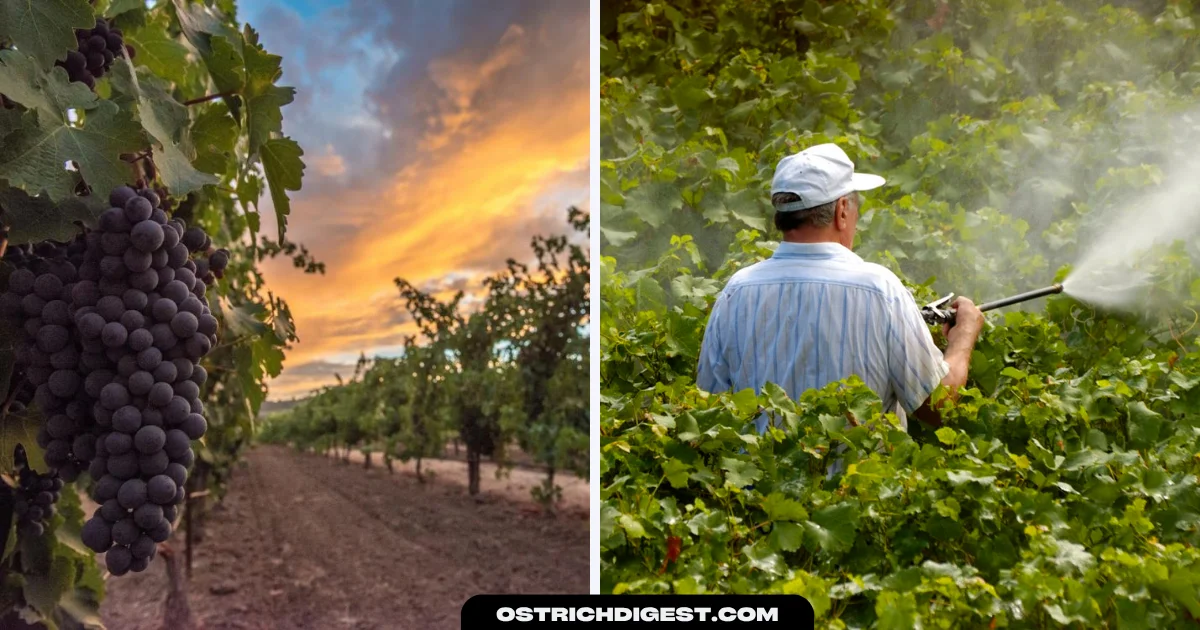
One stray spray drift can wipe out a season of growth in seconds. Grape vines are tough plants, but their green shoots and young leaves have almost no defense against the wrong herbicide at the wrong time. Choosing the best herbicide for grape vines is not just about killing weeds. It is about protecting the crop while doing it.
This guide breaks down the most effective herbicides used in vineyards today. It covers how they work, when to use them, and how to avoid the costly mistakes that damage vines instead of protecting them. Whether managing a backyard vineyard or a large commercial operation, the right herbicide choice makes a real difference in vine health and yield.
Why Weed Control Matters So Much in Vineyards
Weeds are not just an eyesore in a vineyard. They are direct competitors. According to Cornell Cooperative Extension’s Finger Lakes Grape Program, weeds and cover crops compete with grapevines for water, nutrients, and sunlight. This competition is especially harmful during the early years of vineyard establishment, when young vines need every resource they can get.
Cornell’s research notes that poor weed control is one of the biggest causes of reduced productivity in young vineyards. Growers in New York typically expect only half a normal crop by the third year of establishment. A full crop usually does not arrive until year four. Weed pressure can delay that timeline significantly, costing growers real money and time.
How Do Weeds Specifically Harm Young Vines?
Young vines have shallow, fragile root systems. According to the University of Minnesota’s Grape Breeding and Enology program, most grapevine roots sit in the top few inches of soil. This makes them vulnerable to competition from nearby weeds, which often grow faster and pull moisture and nutrients away from the vine before it can establish itself.
Mechanical weed control creates its own problems. The same University of Minnesota research warns that tools like a weed badger can cause serious stress to young vines. These machines disturb the soil and damage shallow roots in the process. This is one major reason herbicides remain the preferred weed control method for new plantings, despite requiring careful handling.

Glyphosate: The Most Common Herbicide for Mature Vineyards
Glyphosate is the most widely used herbicide in vineyard weed management. According to UC IPM, glyphosate is a systemic herbicide. It travels through the plant and kills both the visible parts and the root system below ground. This makes it highly effective against tough perennial weeds that simply regrow after mowing.
However, timing and vine maturity matter enormously with this product. UC IPM states clearly that glyphosate should only be used around mature vines that already have brown bark. Spraying it on green shoots or young leaves can cause serious crop injury. Even a small amount of contact with green tissue can set a vine back for an entire season.
When Is Glyphosate Safe to Use Around Grape Vines?
Fall applications tend to be the safest option. According to Michigan State University Extension, the risk of vine injury drops significantly in the fall. Vines are shedding leaves and slowing their growth at that time of year. This reduces the chance that herbicide will land on actively growing green tissue.
Fall is also the ideal time to target tough perennial weeds. Michigan State notes that plants move carbohydrates toward their roots in the fall to prepare for winter. Applying glyphosate during this period lets the herbicide travel down into the root system along with those nutrients. This kills the weed at its source rather than just burning back the leaves.
| Herbicide | Type | Best Use Case | Key Caution |
|---|---|---|---|
| Glyphosate | Systemic, non-selective | Mature vines, perennial weeds, fall application | Avoid all contact with green tissue or young vines |
| Glufosinate (Rely) | Contact, non-selective | Near young vines, accidental contact zones | Less systemic, kills only what it touches |
| Fluazifop (Fusilade DX) | Selective, grass control | Annual and perennial grasses | 50-day pre-harvest interval applies |
| Paraquat (Gramoxone) | Contact, non-selective | Young vines with shields or wraps | Requires protective shielding to prevent drift |
| Flumioxazin (Chateau) | Pre-emergent | Preventing weed seed germination | Apply before weeds emerge, not after |
| Rimsulfuron (Matrix) | Pre-emergent | Broad spectrum weed prevention | Often tank-mixed with other herbicides |
Glufosinate: A Safer Option Near Young Vines
For vineyards with young, tender vines, glufosinate offers a gentler alternative to glyphosate. According to growers discussing the topic on Winemaking Talk, glufosinate, sold under the brand name Rely, is a broad-spectrum herbicide. Unlike glyphosate, it is not strongly systemic. This means it will not travel deep into the plant’s root system if it accidentally contacts the vine.
This difference matters a great deal in practice. If glufosinate accidentally touches a low leaf or shoot, it typically kills just that leaf. The rest of the vine usually survives undamaged. Glyphosate, by contrast, can travel through the entire plant after similar contact, causing far more extensive damage from the same mistake.
Why Do Some Growers Prefer Glufosinate Over Glyphosate?
The forgiving nature of glufosinate makes it popular for vineyards where spray precision is difficult to guarantee. Hand-spraying around closely spaced young vines always carries some risk of contact. Choosing a less systemic herbicide reduces the consequences when that risk becomes reality.
That said, glufosinate is not without tradeoffs. Because it works mainly through contact rather than systemic movement, it generally does not kill the roots of tough perennial weeds as effectively as glyphosate does. Many growers use glufosinate during the vulnerable young-vine stage, then switch to glyphosate once the vines mature and develop brown, woody bark.
Selective Grass Herbicides: Fusilade DX and Sethoxydim
Not every vineyard weed problem calls for a broad, non-selective herbicide. Grasses, in particular, often respond well to selective grass herbicides that leave broadleaf plants and grapevines unaffected. According to the University of Minnesota, Fusilade DX, which contains the active ingredient fluazifop, is effective on most annual and perennial grasses.
Application limits matter with this product. The label restricts use to no more than 24 fluid ounces per application per acre, and no more than 72 fluid ounces per acre per year. Growers must also wait 14 days between applications. Fusilade DX carries a 50-day pre-harvest interval, so early-season application timing is essential for vineyards planning a normal harvest schedule.
How Does Sethoxydim Compare for Grass Control?
Sethoxydim, sold under the brand name Poast, offers another grass-specific option. According to UC IPM, glyphosate at high rates provides better control of aggressive grasses like bermudagrass than sethoxydim does. However, sethoxydim carries a meaningful safety advantage. UC IPM notes that sethoxydim is safer to use around grapes than glyphosate, making it a reasonable tradeoff when working in tight spaces near vine rows.
Choosing between these two grass herbicides often comes down to how close the weeds are growing to the vines. For grass problems directly under the vine canopy, sethoxydim’s improved safety profile may outweigh its slightly reduced effectiveness against the toughest perennial grass species.
Pre-Emergent Herbicides: Stopping Weeds Before They Start
Pre-emergent herbicides take a fundamentally different approach than the products discussed so far. Rather than killing existing weeds, they prevent weed seeds from germinating in the first place. According to the University of Georgia’s viticulture program, several pre-emergent options are registered for vineyard use, including Chateau, Matrix, simazine, Prowl H2O, and Spartan Charge.
These products work directly through the soil, so timing and soil contact matter enormously. Michigan State Extension recommends mowing or trimming large vegetation under the vines before applying any pre-emergent herbicide. This step helps the product reach bare soil, which is essential for proper activation and weed prevention.
Why Combine Pre-Emergent and Post-Emergent Herbicides?
Relying solely on post-emergent herbicides like glyphosate creates long-term problems. The University of Georgia’s viticulture program warns that multiple glyphosate applications per year, especially three or more, have been linked to reduced vine vigor. Repeated glyphosate use is also a primary driver of herbicide-resistant weed populations developing over time.
Combining pre-emergent herbicides with occasional post-emergent treatments reduces both of these risks. According to the University of Georgia, this combined approach mitigates herbicide resistance development, maintains healthier vines, and reduces the total number of applications needed each season. Fewer applications also free up grower time for other vineyard tasks like canopy management and disease control.
Protecting Young Vines During Herbicide Application
Young, newly planted vines need the most careful handling of all. According to UC IPM, paraquat can be used to control weeds near young vines, but only when those vines are protected with shields or wraps. Without this protection, even brief contact with paraquat can cause severe and sometimes fatal damage to a young vine.
Physical barriers offer one of the most reliable forms of protection. The University of Minnesota recommends placing grow tubes around young vines specifically so that herbicide can be sprayed nearby without directly injuring the plant. This simple step allows growers to use stronger, more effective herbicides without constantly worrying about accidental contact.
What Equipment Reduces Herbicide Drift Risk?
Equipment choice plays a major role in preventing accidental vine damage. UC IPM recommends using a backpack sprayer or a low-volume controlled droplet applicator for small treatment areas. These tools allow far more precision than broadcast spraying equipment, which is much harder to control around closely spaced vine rows.
Shrouds and shields attached to spray equipment add another layer of protection. UC IPM specifically recommends using a shroud or shield to block drift when applying herbicides like glyphosate, oxyfluorfen, or paraquat near vine rows. This physical barrier stops herbicide droplets from drifting onto leaves, green stems, or new shoots during application.

Common Weed Problems and the Best Herbicide Response
Different weeds call for different herbicide strategies, and matching the product to the problem improves results significantly. Bermudagrass, a particularly aggressive perennial grass, often requires immediate spot treatment. UC IPM recommends sethoxydim or glyphosate for this purpose, noting that glyphosate at high rates works better but carries more risk if it drifts onto vines.
Blackberry plants growing along vineyard margins present a different challenge. UC IPM recommends spot treating blackberries with glyphosate at the flower stage or shortly after fruiting, when soil moisture is good and the plant is not under water stress. Growers should also separate any berry stems that have grown into the grapevine before treating, since this reduces the chance of herbicide reaching the vine itself.
How Should Hairy Fleabane and Field Bindweed Be Treated?
Hairy fleabane spreads aggressively through wind-dispersed seeds, with a single plant capable of producing over 40,000 seeds, according to UC IPM. Frequent tillage can reduce populations significantly, but soil-residual herbicides like simazine or rimsulfuron also provide effective control when applied at the right time.
Field bindweed responds differently depending on its growth stage. UC IPM notes that bindweed seedlings can be managed with cultivation, but mature plants often spread from root or stem fragments disturbed during tillage. For established bindweed, spot treatment with a high label rate of glyphosate tends to produce the most reliable results.
Choosing the Right Herbicide Program for Your Vineyard
Building an effective herbicide program means thinking beyond a single product. Most successful vineyard weed management plans combine several herbicide types used at different times of year. According to the University of Minnesota, glyphosate can often be tank-mixed with labeled pre-emergent herbicides, allowing growers to address existing weeds and prevent future germination in a single application.
Vine age should guide every decision in this process. Newly planted vines need gentler, more contact-based herbicides, physical shielding, or both. Mature vines with established brown bark can tolerate stronger systemic herbicides like glyphosate, provided that green tissue contact is still avoided. Treating every section of the vineyard with the same blanket approach, regardless of vine age, is one of the most common and costly mistakes growers make.
What Should a Seasonal Herbicide Plan Look Like?
A well-structured seasonal plan typically starts before planting. Cornell Cooperative Extension recommends eliminating perennial weeds from the vineyard site the year before planting begins, often through a broadcast glyphosate application followed by plowing. This clears the ground of established weed problems before vines ever go into the soil.
Once vines are established, the plan shifts toward maintenance. Pre-emergent herbicides applied in early spring or fall prevent new weed germination throughout the growing season. Spot treatments with post-emergent products address any weeds that break through. Regular weed surveys, conducted at least twice a year according to UC IPM, help growers track which species are present and adjust their herbicide choices accordingly.
Frequently Asked Questions
What is the best herbicide for grape vines overall?
Glyphosate remains the most widely used herbicide for mature grape vines due to its broad effectiveness against perennial weeds. However, it should only be used on vines with brown, woody bark, since contact with green tissue can cause serious damage.
Is glyphosate safe to use around young grape vines?
No, glyphosate is generally not recommended for young vines with green bark. Contact with green tissue can cause significant injury. Growers typically use shields, grow tubes, or gentler alternatives like glufosinate when working near young plantings.
What herbicide is safest to use near grape vine leaves?
Glufosinate, sold as Rely, is considered safer near vine leaves because it is not strongly systemic. If it accidentally contacts a leaf or shoot, the damage is usually limited to that single point of contact rather than spreading through the entire plant.
When is the best time of year to apply herbicide in a vineyard?
Fall is generally the safest time for glyphosate applications, since vines are dormant and not actively growing. Pre-emergent herbicides are also commonly applied in fall or early spring to prevent weed seeds from germinating.
Can pre-emergent and post-emergent herbicides be used together?
Yes, combining both types is a common and effective strategy. Pre-emergent herbicides prevent new weeds from germinating, while post-emergent products address existing weeds. This combination also reduces the risk of herbicide-resistant weeds developing over time.
What happens if herbicide drifts onto grape vine leaves?
Herbicide drift onto green leaves or shoots can cause significant crop injury, including stunted growth or vine death in severe cases. Systemic herbicides like glyphosate are particularly damaging since they travel through the entire plant after contact.
How often should glyphosate be applied in a vineyard?
Experts generally recommend limiting glyphosate applications to avoid resistance and vine stress. Applying it three or more times per year has been linked to reduced vine vigor, so combining it with pre-emergent herbicides to reduce total applications is often recommended.
What is the best herbicide for grass weeds in a vineyard?
Fusilade DX, containing fluazifop, is effective against most annual and perennial grasses. Sethoxydim, sold as Poast, is another grass-specific option that is considered safer around grape vines, though slightly less effective against tough perennial grasses like bermudagrass.
Do herbicides eliminate the need for mowing in a vineyard?
No, most effective vineyard weed programs combine herbicides in the vine row with mowing or cultivation between the rows. This combination addresses weeds both directly under the vines and in the surrounding open areas.
How can growers protect young vines while still using strong herbicides?
Physical barriers such as grow tubes, shields, or wraps allow growers to spray near young vines without direct contact. Using a backpack sprayer or low-volume controlled droplet applicator also improves precision and reduces the risk of herbicide drift onto sensitive young plants.
Read about renewing vows in vegas little white chapel