
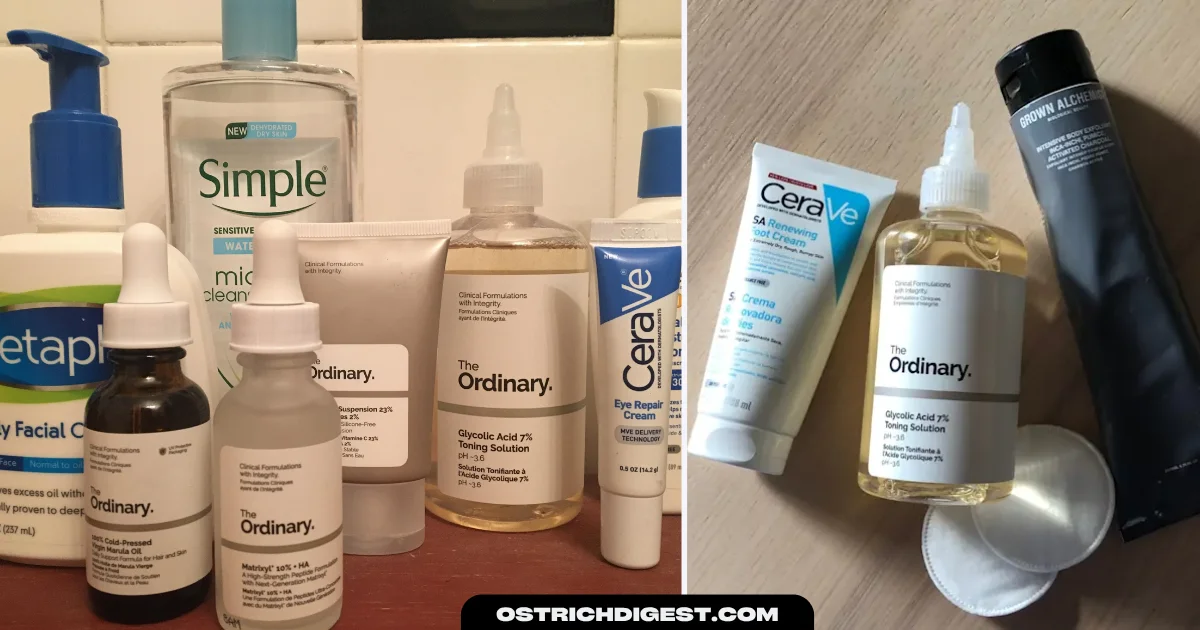
My skincare shelf is basically a museum exhibit of every viral TikTok recommendation from the past three years. Somewhere between the fifteenth “get ready with me” video and my third attempted skincare reset, two brands kept showing up everywhere: CeraVe and The Ordinary. Everyone has an opinion, half of them contradict each other, and almost none of them explain why.
So I went deeper than another listicle. This comparison breaks down what each brand actually does, how their formulas differ at the ingredient level, and which one deserves a permanent spot in a Gen Z skincare routine. Spoiler: the real answer is not as simple as picking a side.
What Are CeraVe and The Ordinary, and Why Do They Dominate Gen Z Skincare?
CeraVe is a dermatologist-developed skincare brand built around barrier repair. Every product in its core lineup contains three essential ceramides, ceramides 1, 3, and 6-II, alongside hyaluronic acid. According to AesteticAdvice, this formulation philosophy treats the skin barrier as the foundation everything else depends on, rather than treating individual concerns in isolation.
The Ordinary takes a completely different approach. It sells single-ingredient or minimally formulated products at close to production cost. Want straight niacinamide? You get a bottle of niacinamide. Want vitamin C? You get L-ascorbic acid with minimal extras. This approach gives shoppers precise control over what goes on their skin, but it also requires shoppers to actually understand what they are buying.
Gen Z gravitated toward both brands for overlapping but distinct reasons. The Ordinary appealed to a generation raised on ingredient lists and skincare TikTok, where knowing the difference between niacinamide and salicylic acid became a kind of literacy. CeraVe appealed to the same generation’s growing skepticism toward overcomplicated routines, offering complete formulas that simply worked without requiring a chemistry degree.
How Do CeraVe and The Ordinary Differ in Formulation Philosophy?
This is the core distinction that explains almost every other difference between these brands. CeraVe builds complete formulas around synergy. Take the brand’s Moisturizing Cream: it combines three ceramides, hyaluronic acid, and cholesterol in balanced ratios designed to mimic the skin’s own lipid composition, according to research compiled by Alibaba’s product insights team.
The Ordinary builds around precision instead. A single active ingredient, delivered at a stated concentration, with minimal buffering or supporting ingredients. This means The Ordinary’s Niacinamide 10% + Zinc 1% delivers a genuinely high concentration of active ingredient. However, the same source notes that the lack of buffering ingredients means users must patch test carefully and introduce new products slowly to avoid irritation.
Which Approach Actually Performs Better in Practice?
Neither approach is universally superior. CeraVe’s complete formulas tend to produce gentler, more predictable results because the supporting ingredients reduce the chance of irritation. The Ordinary’s concentrated actives can produce faster, more dramatic results for specific concerns, but they come with a higher risk of redness, flaking, or breakouts if introduced too quickly.
One frequently cited example from Alibaba’s skincare comparison involved a 28-year-old with combination skin and persistent redness after breakouts. She tried The Ordinary’s Niacinamide 10% + Zinc 1% twice daily and saw mild improvement within two weeks, but also developed flaking and tightness. Switching to a CeraVe formula combining retinol with ceramides and niacinamide at lower, stabilized concentrations produced gradual improvement over six weeks with no irritation. The lesson here is not that one brand wins. It is that delivery system matters as much as ingredient concentration.
Ingredient Comparison: What’s Actually Inside the Bottles?
Reading ingredient lists side by side reveals exactly how different these brands really are. CeraVe’s PM Facial Moisturizing Lotion lists water, glycerin, niacinamide, ceramide NP, ceramide AP, ceramide EOP, sodium hyaluronate, and cholesterol among its key components, according to ingredient data compiled by Skinsort. That is a complete, multi-functional formula in a single bottle.
The Ordinary’s Niacinamide 10% + Zinc 1% lists water, niacinamide, zinc PCA, and a much shorter supporting ingredient list. Skinsort’s side-by-side comparison confirms that ingredients higher on a list are typically present in larger amounts, and niacinamide sits second on The Ordinary’s list, confirming a genuinely high concentration. CeraVe’s version, by contrast, lists niacinamide further down, meaning the concentration is lower but the supporting cast of barrier ingredients is much larger.
Do Both Brands Use the Same Active Ingredients?
In several categories, yes. Both brands sell vitamin C serums using L-ascorbic acid, the most researched and effective form of vitamin C for reducing dark spots and improving overall skin texture. According to UK Beauty Room’s direct comparison, the CeraVe vitamin C serum adds niacinamide, ceramides, and hyaluronic acid, while The Ordinary’s version adds only hyaluronic acid.
This pattern repeats across categories. Both brands compete in retinol, niacinamide, and hyaluronic acid products. CeraVe consistently wraps its actives in a fuller supporting formula. The Ordinary consistently isolates the active ingredient and prices it accordingly. Neither ingredient choice is wrong. They simply reflect two different philosophies about what a skincare product should be.
| Category | CeraVe Approach | The Ordinary Approach |
|---|---|---|
| Niacinamide | Lower concentration, added to moisturizers with ceramides | High concentration (10%), standalone serum with zinc |
| Vitamin C | L-ascorbic acid plus niacinamide and ceramides | L-ascorbic acid plus hyaluronic acid only |
| Retinol | Combined with ceramides and niacinamide for stability | Standalone retinol at multiple percentage strengths |
| Cleansers | Wide range, ceramide and hyaluronic acid infused | Limited cleanser options |
| Exfoliants | Minimal exfoliating products | Extensive range, glycolic, lactic, and peeling solutions |
| Price Point | Larger sizes, better value for daily essentials | Smaller sizes, lower price per bottle |
| Best For | Gentle daily maintenance, barrier repair | Targeted, high-concentration active treatment |
Which Brand Is Better for Acne-Prone Gen Z Skin?
This is one of the most searched comparisons, and the honest answer involves both brands working together rather than competing. According to Tune and Thrive’s 2026 brand comparison, The Ordinary is generally considered more effective for actively treating acne because of ingredients like salicylic acid and high-concentration niacinamide. These actives directly target oil production, clogged pores, and inflammation.
CeraVe approaches acne differently. Rather than aggressively treating breakouts, it focuses on keeping the surrounding skin hydrated and preventing the kind of irritation that makes acne worse. Tune and Thrive notes that CeraVe’s role is less about dramatic intervention and more about preventing the skin barrier from breaking down further during treatment.
Can You Combine Both Brands for Acne-Prone Skin?
Yes, and most skincare experts recommend exactly this approach. UK Beauty Room’s comparison specifically recommends CeraVe’s Foaming Facial Cleanser to remove excess oil without stripping natural moisture, paired with The Ordinary’s Niacinamide 10% + Zinc 1% to directly regulate sebum production. This combination uses each brand for what it does best rather than asking either brand to do everything.
A typical Gen Z acne routine built from both brands might use a gentle CeraVe cleanser in the morning, followed by The Ordinary’s niacinamide serum, followed by a CeraVe moisturizer to lock in hydration and prevent the tightness that high-strength actives can cause. This layering approach respects both the need for active treatment and the need for barrier support.
Which Brand Wins for Sensitive and Reactive Skin Types?
For anyone dealing with reactive, easily irritated, or compromised skin, CeraVe is the more consistently recommended option. AU Beauty Bazaar’s brand comparison states clearly that CeraVe is often recommended for sensitive skin due to its gentle formulations and inclusion of ceramides. The brand’s entire philosophy centers on restoring rather than aggressively treating the skin.
The Ordinary can still work for sensitive skin, but it requires more caution. Niacinamide, despite its reputation as gentle, can irritate sensitive skin and even cause a temporary increase in acne for some users, according to UK Beauty Room. This does not mean sensitive-skinned users should avoid The Ordinary entirely. It means they should patch test rigorously and introduce one product at a time rather than building a five-step routine overnight.
What Should Gen Z Women With Sensitive Skin Actually Do?
Start with barrier-supportive products before introducing potent actives. This sequencing matters more than people realize. Building a strong, hydrated barrier using CeraVe’s ceramide-rich formulas first creates a more resilient foundation. Once that foundation is stable, introducing The Ordinary’s actives one at a time, waiting at least two weeks between additions, allows the skin to adapt without becoming overwhelmed.
Many Gen Z skincare mistakes come from impatience rather than poor product choice. Watching a ten-step routine video and trying to replicate all of it within a week is a common pattern, and it is also a common cause of sudden breakouts and irritation that get blamed on the products themselves rather than the pace of introduction.
Price, Value, and What Matters Most to a Gen Z Budget
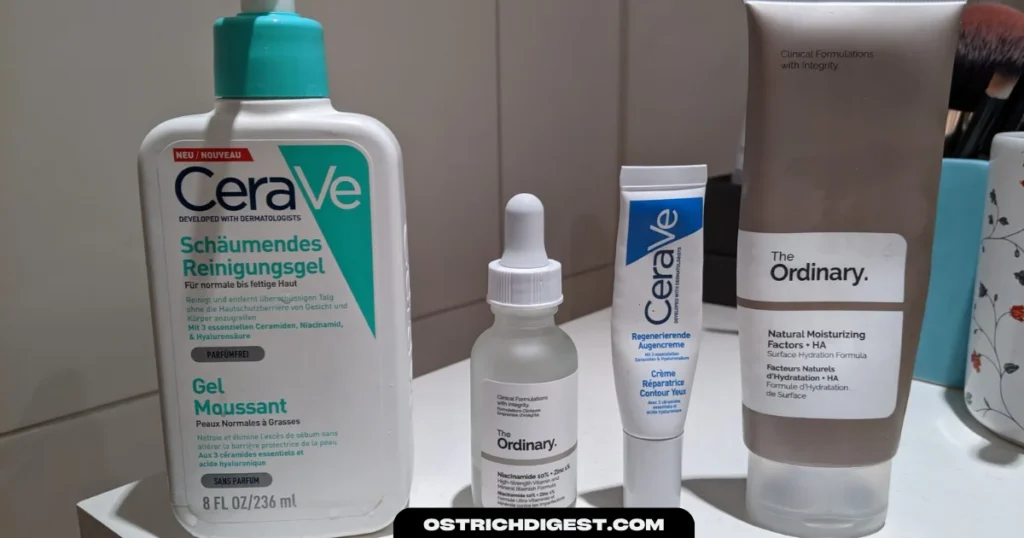
Affordability is a genuine factor for Gen Z shoppers, and both brands market themselves around accessible pricing, but the value structure differs. Glow Darling’s brand comparison notes that The Ordinary typically offers smaller sizes at lower individual price points, while CeraVe provides larger sizes that deliver better long-term value for daily essentials like cleansers and moisturizers.
This means the better financial decision depends on how a product is used. A serum that gets applied in small amounts, like The Ordinary’s niacinamide or vitamin C, can last a long time even in a smaller bottle. A cleanser or moisturizer used twice daily benefits from CeraVe’s larger packaging, since these products get used up faster regardless of brand.
Is It Worth Mixing Both Brands Into One Routine?
For most Gen Z skincare budgets, yes. Glow Darling’s suggested routine uses CeraVe’s Foaming Cleanser, The Ordinary’s Niacinamide, CeraVe’s Daily Moisturizing Lotion, and sunscreen in the morning, then switches to CeraVe’s cleanser, The Ordinary’s Hyaluronic Acid, and CeraVe’s Skin Renewing Night Cream at night. This kind of mixed routine captures the cost efficiency of CeraVe’s everyday products alongside the targeted potency of The Ordinary’s actives.
Building a routine this way also avoids the trap of buying an entire ecosystem from one brand simply for the sake of consistency. Skincare effectiveness depends on what is in the bottle, not which logo is printed on it.
Building a Complete Gen Z Routine Using Both Brands Strategically
A well-structured routine does not need ten steps or a five-figure shelf of products. It needs the right products doing the right job at the right time. Morning routines should prioritize protection: a gentle cleanse, a targeted active if needed, hydration, and sunscreen as the non-negotiable final step.
Evening routines have more room for active treatment, since the skin repairs itself overnight without UV exposure to worry about. This is when retinol, exfoliating acids, or higher-strength actives from The Ordinary tend to work best. Following them with a CeraVe moisturizer helps offset the potential dryness that actives can cause overnight.
What Does a Realistic Weekly Routine Look Like?
A sustainable approach does not require every product every day. Niacinamide or vitamin C can be used daily since they are generally well tolerated. Exfoliating acids and retinol, however, work better at two to three times a week, especially for anyone newer to active ingredients. CeraVe’s moisturizing and barrier-repair products can be used daily without restriction, since their entire design purpose is consistent, gentle support.
Consistency matters more than intensity. A simple four-product routine used correctly every day will outperform an elaborate ten-product routine used inconsistently or introduced too quickly. This is one area where Gen Z’s social-media-driven skincare culture sometimes works against good outcomes, since viral routines often prioritize visual appeal over practical sustainability.
I Am a Genz Woman. How Does Cerave Compare to The Ordinary in Terms of Skincare Effectiveness?
This is the exact question that started my whole research rabbit hole, and it deserves a direct answer. CeraVe and The Ordinary are not really competing on the same scale of effectiveness, because they are not trying to do the same job. CeraVe is consistently more effective at strengthening and protecting the skin barrier, while The Ordinary is consistently more effective at delivering high-concentration actives that target specific concerns like dullness, oil, or uneven tone.
If effectiveness is measured by how reliably a product avoids irritation while still improving hydration, CeraVe tends to win. If effectiveness is measured by how fast and how strongly a product changes a specific concern, The Ordinary tends to win. Neither measurement is more valid than the other. It simply depends on what a Gen Z woman is actually trying to fix.
In practical terms, the most effective approach blends both. Using CeraVe to keep the skin barrier calm and hydrated while introducing The Ordinary’s actives slowly and selectively tends to outperform relying on either brand alone. That combination is really the most honest answer to how CeraVe compares to The Ordinary in terms of skincare effectiveness.
The Verdict: Which Brand Should You Actually Choose?
Neither brand is objectively better, and that is not a cop-out answer. AesteticAdvice’s 2026 comparison sums up the practical reality well: The Ordinary excels at active treatment serums, including niacinamide, vitamin C, retinol, and exfoliants, at unbeatable prices, while CeraVe excels at cleansers, moisturizers, and barrier repair. The most effective routine uses both brands for what each genuinely does best.
For a Gen Z woman building her first real skincare routine, the smartest starting point is CeraVe. Establishing a healthy, hydrated barrier first reduces the risk of irritation when actives get introduced later. Once that foundation feels stable, adding one targeted product from The Ordinary, whether it is niacinamide for oil control or vitamin C for brightness, allows for more precise, results-driven skincare without overwhelming the skin.
Ultimately, the brand war framing that dominates skincare TikTok misses the point. CeraVe and The Ordinary were never designed to compete directly. They were designed to solve different problems, and the most effective Gen Z skincare routines treat them as complementary tools rather than rival teams.
Frequently Asked Questions
Is CeraVe or The Ordinary better for beginners?
CeraVe is generally the better starting point for skincare beginners because its complete formulas reduce the risk of irritation. The Ordinary works well for beginners too, but it requires more research into ingredient concentrations and proper introduction pacing.
Can I use CeraVe and The Ordinary together in the same routine?
Yes, many dermatology-informed sources recommend combining both brands. CeraVe’s cleansers and moisturizers pair well with The Ordinary’s targeted serums, allowing you to get barrier support and active treatment in one routine.
Which brand is more effective for acne?
The Ordinary is generally considered more effective for directly treating acne due to ingredients like salicylic acid and high-concentration niacinamide. CeraVe supports the surrounding skin by maintaining hydration and reducing irritation during treatment.
Is The Ordinary too strong for sensitive skin?
It can be, depending on the product and concentration. Niacinamide and acids from The Ordinary can cause irritation in sensitive skin if introduced too quickly. Patch testing and slow introduction reduce this risk significantly.
Does CeraVe contain any active ingredients, or is it just moisturizer?
CeraVe contains active ingredients including niacinamide, retinol, and salicylic acid in select products, but always within a fuller supporting formula. This differs from The Ordinary, which typically isolates a single active ingredient at a stated concentration.
Which brand offers better value for money?
The Ordinary offers lower individual prices but smaller bottle sizes, making it ideal for serums used in small amounts. CeraVe offers larger sizes, providing better long-term value for daily-use products like cleansers and moisturizers.
What is the biggest difference between CeraVe and The Ordinary?
CeraVe formulates complete products built around barrier repair, combining ceramides, hyaluronic acid, and cholesterol in balanced ratios. The Ordinary formulates minimal, single-ingredient products at high concentrations, prioritizing precision over complete formulation.
Should I choose one brand exclusively, or mix both?
Mixing both brands is the most commonly recommended approach. Using CeraVe for daily essentials and The Ordinary for targeted treatment lets you benefit from each brand’s specific strengths rather than limiting yourself to one philosophy.
Is niacinamide from The Ordinary the same as the niacinamide in CeraVe products?
The ingredient itself is chemically identical, but the concentration and supporting formula differ. The Ordinary delivers niacinamide at a stated 10% concentration in a minimal base, while CeraVe includes niacinamide at a lower concentration alongside ceramides and hyaluronic acid.
I am a genz woman. How does CeraVe compare to The Ordinary in terms of skincare effectiveness?
CeraVe is more effective for barrier repair and gentle daily hydration, while The Ordinary is more effective for targeted, high-concentration active treatment. For most Gen Z skin concerns, combining both brands produces better overall effectiveness than relying on just one.
I am a genz woman. How does CeraVe compare to The Ordinary in terms of skincare effectiveness for everyday use?
For everyday use, CeraVe is generally the more effective and lower-risk option since its formulas are designed for consistent daily application without irritation. The Ordinary works best layered in occasionally for specific goals rather than as the foundation of a daily routine.
How long does it take to see results from either brand?
Results vary by product and skin concern, but barrier-repair improvements from CeraVe often appear within a few weeks of consistent use. Active treatments from The Ordinary, such as niacinamide or exfoliating acids, can show visible changes in skin texture or tone within four to six weeks when introduced gradually.
Read about Hazel Vorice McCord