
Starting Point
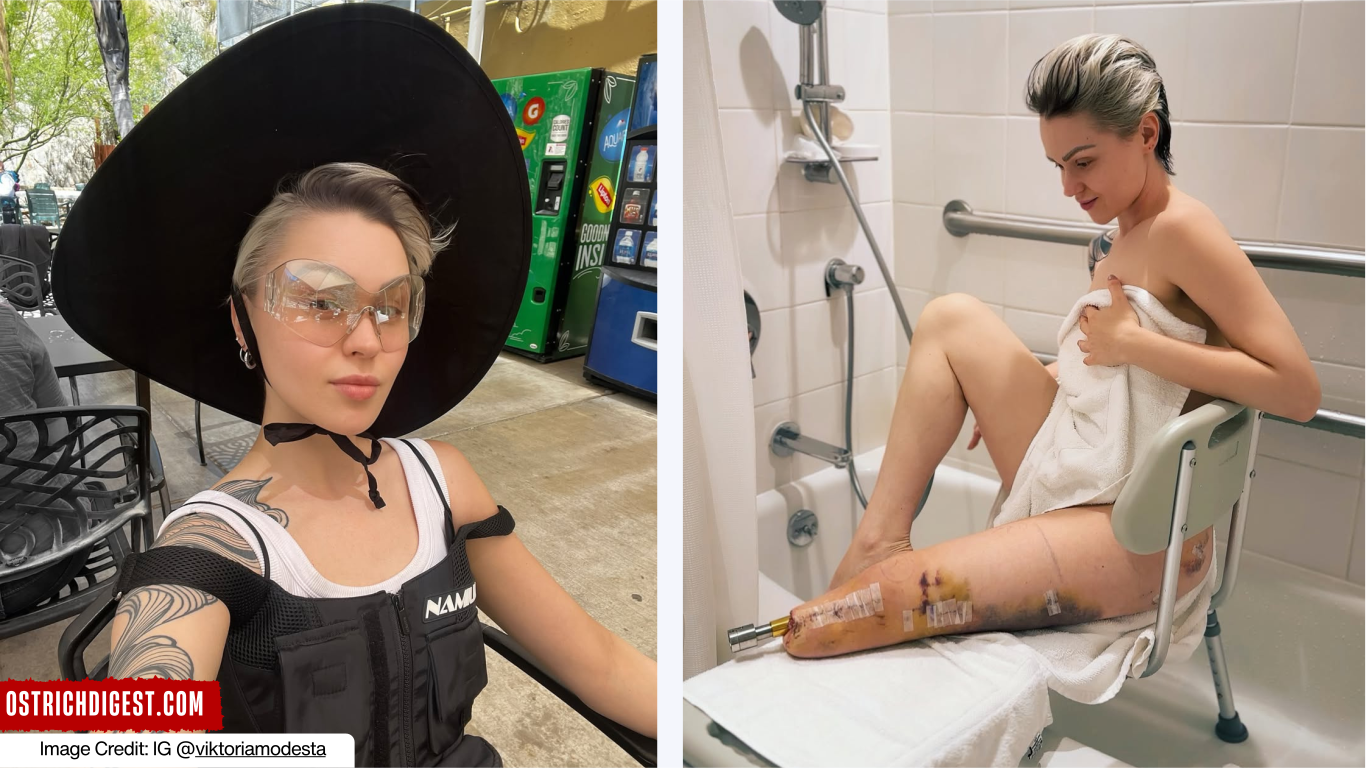
Viktoria Modesta is one of the most unique and inspiring figures in modern music and performance art. Known globally as the “Bionic Pop Artist,” she has transformed personal adversity into a groundbreaking artistic identity. Her story begins with a serious medical challenge at birth that ultimately shaped her path toward becoming a global icon of creativity, technology, and disability empowerment.
Born as Viktorija Moskaļova in Latvia, Modesta experienced a severe leg injury at birth due to medical negligence. After years of surgeries and pain, she made a life-changing decision that allowed her to redefine beauty, identity, and performance in the music industry.
Today, Viktoria Modesta is celebrated for merging music, fashion, prosthetic design, and futuristic performance art into a bold new vision of human potential.
Quick Bio
| Attribute | Details |
|---|---|
| Full Name | Viktorija Moskaļova |
| Stage Name | Viktoria Modesta |
| Birth Year | 1987 / 1988 |
| Birthplace | Daugavpils, Latvia |
| Nationality | Latvian-born British |
| Profession | Pop Artist, Creative Director, Performance Artist |
| Known For | “Bionic Pop Artist” identity and artistic prosthetics |
| Music Debut | Early 2010s |
| Major Breakthrough | “Prototype” music video (2014) |
| Residence | United Kingdom |
Early Life and Birth Injury
A Difficult Start in Latvia
Viktoria Modesta was born in Daugavpils, Latvia, during the late 1980s. Unfortunately, her birth was complicated by medical negligence, which resulted in severe damage to her left leg.
The injury led to a long and painful childhood filled with medical treatments and hospital visits.
Throughout her early years, Modesta endured numerous operations aimed at repairing the damage, but none fully solved the problem.
Years of Medical Struggles
Doctors attempted to correct the injury through surgery many times.
In total, she underwent 15 surgeries during her childhood and teenage years.
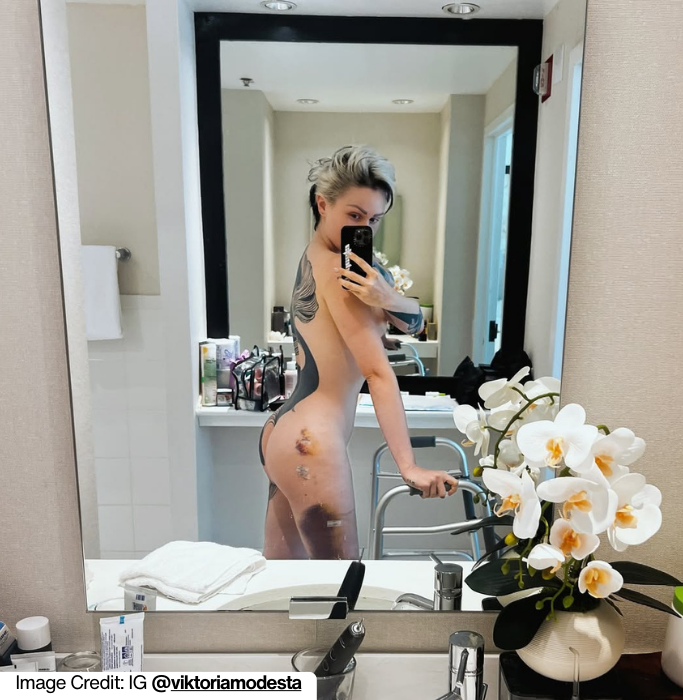
Despite these efforts, the procedures failed to restore proper function in her leg. Instead, they left her with ongoing pain, limited mobility, and frequent medical complications.
The Life-Changing Decision
Choosing Amputation at Age 20
At the age of 20, Viktoria Modesta made a decision that would change her life forever.
Rather than continue living with chronic pain and limited movement, she chose to undergo a voluntary below-the-knee amputation.
For many people, this might seem like a drastic step. But for Modesta, it became a turning point that allowed her to gain:
- Greater mobility
- Physical independence
- Creative freedom
This decision ultimately helped her transform her body into a platform for artistic expression.
Reinventing Identity Through Art
After her amputation, Modesta began exploring new creative possibilities.
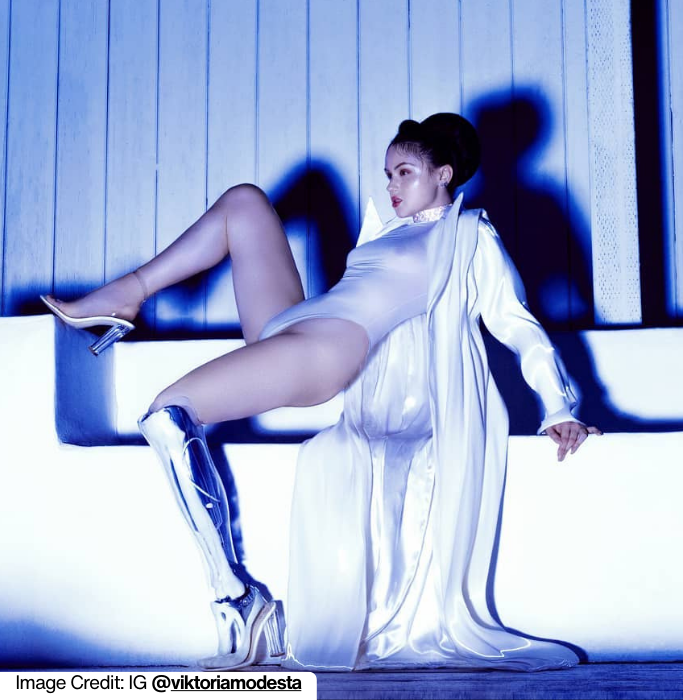
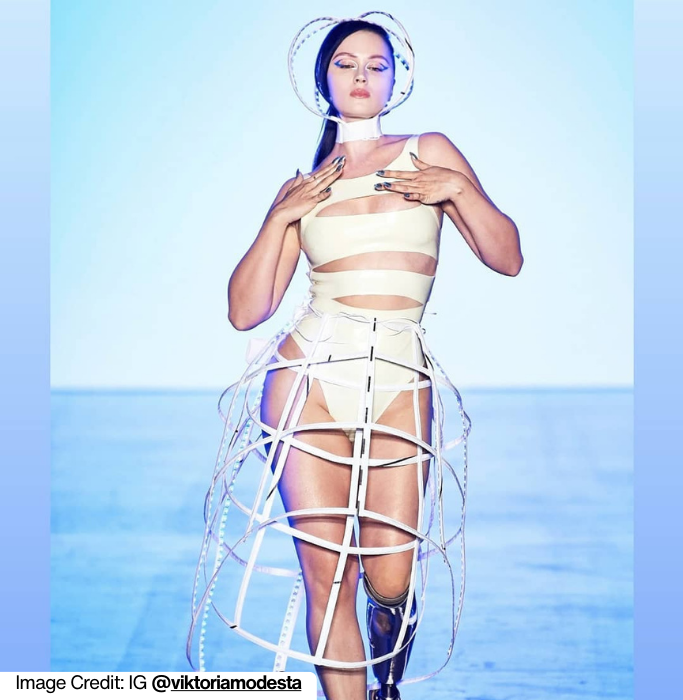
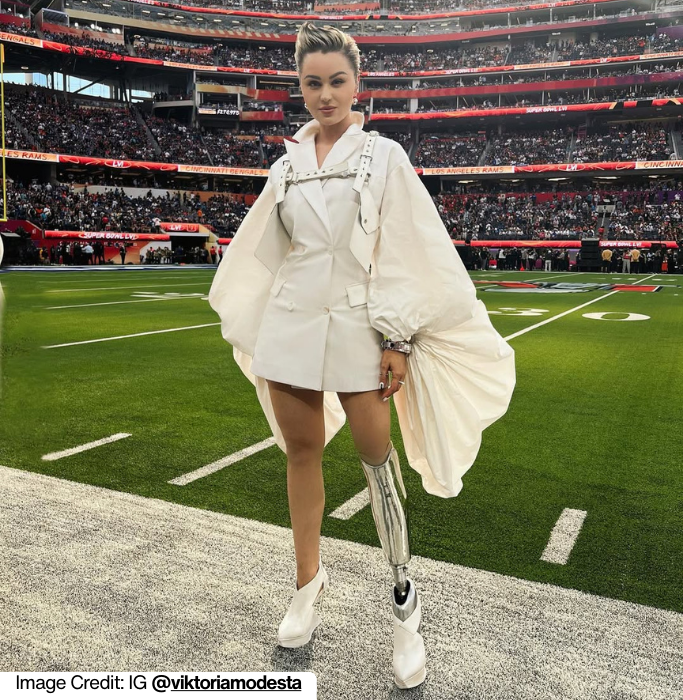
Rather than hiding her prosthetic limb, she embraced it as part of her identity and turned it into an artistic statement.
She collaborated with designers and engineers to create sculptural prosthetics that could be used in performances and music videos.
These prosthetics are often created in collaboration with the innovative design studio:
The Alternative Limb Project
Rise of the “Bionic Pop Artist”
The Viral Breakthrough
Viktoria Modesta gained international attention in 2014 with the release of the music video for the song:
Prototype
The video was produced in partnership with Channel 4 in the United Kingdom.
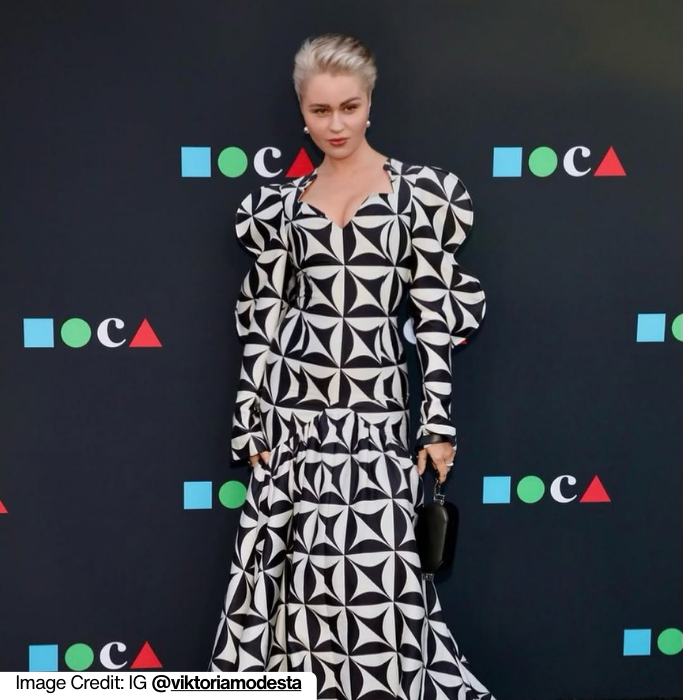
In the video, Modesta appeared with a variety of futuristic prosthetic limbs, presenting herself as a powerful cybernetic pop star.
The concept quickly went viral, gaining millions of views online and generating global media coverage.
Redefining Beauty Standards
The “Prototype” video was more than just a music project. It challenged traditional ideas about:
- Beauty
- Disability
- Body image
Instead of portraying disability as a limitation, Modesta presented it as a source of creativity and empowerment.
Her message resonated with audiences worldwide and helped open conversations about inclusion in fashion, music, and media.
Paralympics Performance
Even before her global music breakthrough, Viktoria Modesta had already performed on a major stage.
In 2012, she appeared at the closing ceremony of the 2012 Summer Paralympics in London.
During the ceremony, she performed as the Snow Queen, delivering a dramatic and visually striking performance that combined dance, costume design, and theatrical staging.
The performance introduced many viewers to her artistic vision.
Fashion and Brand Collaborations
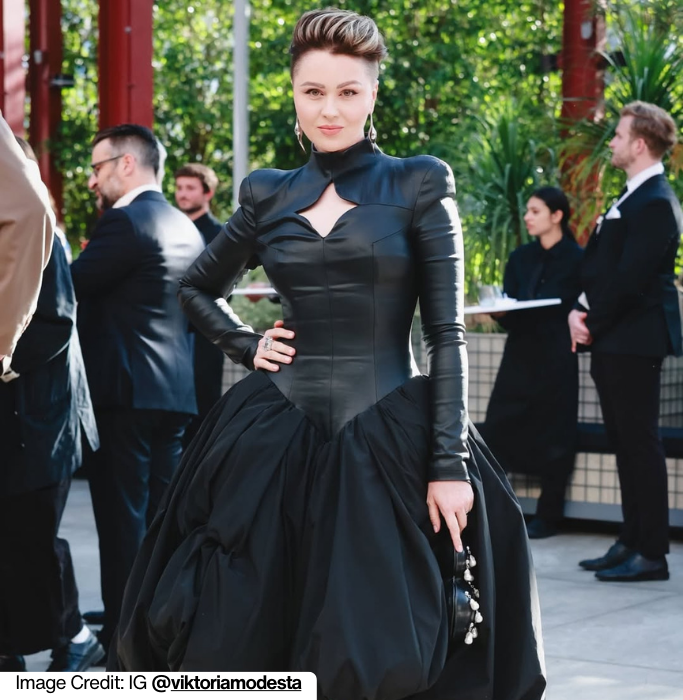
As her reputation grew, Modesta began collaborating with major fashion and luxury brands.
Rolls-Royce Campaign
She appeared in the Black Badge campaign for the luxury car brand:
Rolls-Royce
The campaign highlighted themes of innovation and bold design, values that matched Modesta’s artistic philosophy.
Beauty Industry Work
She also collaborated with:
e.l.f. Cosmetics
These partnerships helped expand her influence beyond music into fashion, beauty, and design.
Performing at the Legendary Crazy Horse
In 2019, Viktoria Modesta achieved another unique milestone.
She became the “Bionic Showgirl” during a residency at the famous Paris cabaret:
Crazy Horse
This performance blended classic cabaret with futuristic aesthetics, showcasing her signature prosthetic designs and stage presence.
Music Career and Discography
Although she is widely known for her visual performances, Modesta has also released several music projects.
EP Releases
Her major releases include:
| EP | Year |
|---|---|
| EP1 | 2010 |
| Counterflow | 2016 |
| MOKSHA | 2021 |
These projects combine electronic music, pop, and experimental sounds.
The Philosophy Behind Her Art
Viktoria Modesta describes her creative identity using concepts such as:
- Post-human
- Post-disability
- Tech-driven performance art
Her work explores the relationship between:
- The human body
- Technology
- Artificial enhancements
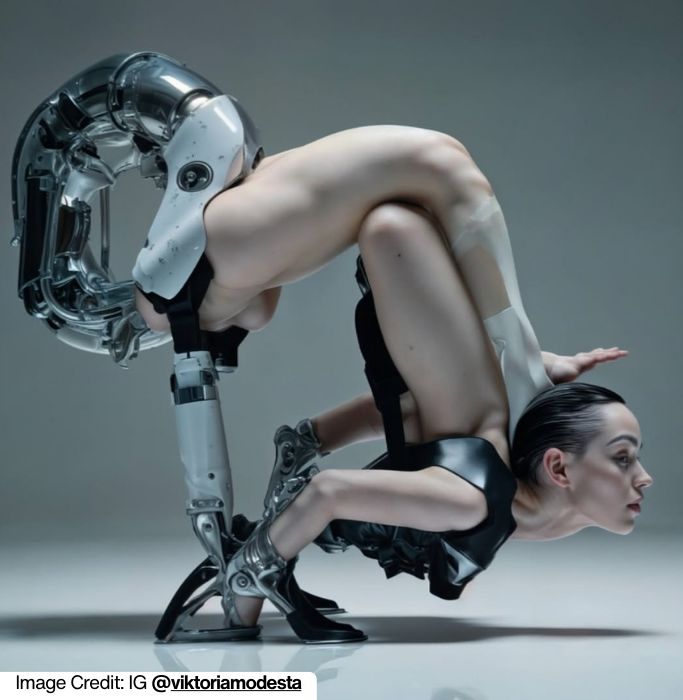
Rather than treating prosthetics as medical devices, she treats them as artistic tools and futuristic fashion pieces.
Interesting Facts About Viktoria Modesta
She Turned Prosthetics into Fashion
Her custom prosthetics include designs shaped like:
- Sculptures
- Mirrors
- Crystal spikes
- Futuristic robotic limbs
She Blends Multiple Creative Fields
Her work combines:
- Music
- Fashion design
- Technology
- Performance art
She Is a Global Disability Advocate
Modesta regularly speaks about representation and inclusion in the arts.
FAQs
Why was Viktoria Modesta’s leg injured at birth?
Her leg was severely damaged due to medical negligence during childbirth.
Why did Viktoria Modesta choose amputation?
After 15 unsuccessful surgeries, she chose amputation at age 20 to improve her mobility and quality of life.
What is Viktoria Modesta famous for?
She is famous as the world’s first widely known amputee pop star, known for artistic prosthetic limbs.
What song made Viktoria Modesta famous?
Her breakthrough came with the “Prototype” music video in 2014.
Where is Viktoria Modesta from?
She was born in Daugavpils, Latvia, but later moved to the United Kingdom.
Conclusion
Viktoria Modesta’s journey from a birth injury to becoming a global artistic icon is a powerful example of resilience and creativity. Instead of allowing disability to limit her identity, she transformed it into a revolutionary artistic statement.
Through music, fashion, and technology, she has challenged outdated ideas about beauty and capability. Today, Viktoria Modesta stands as a symbol of innovation, proving that the human body, combined with imagination and technology, can create entirely new forms of expression.