
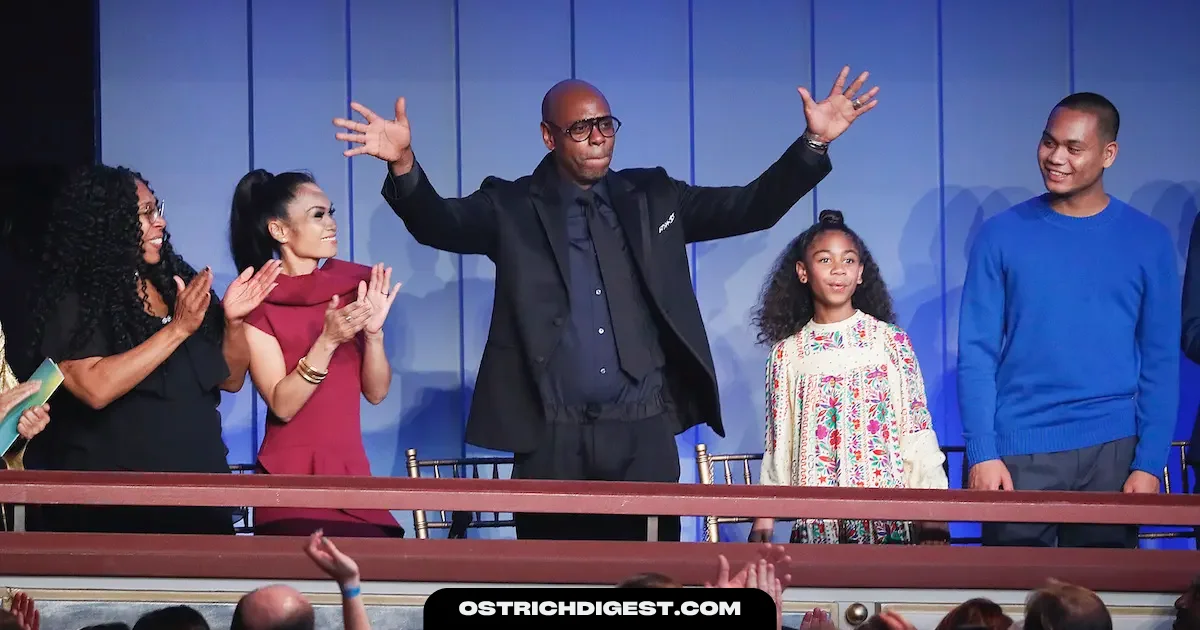
The son of one of the most recognizable comedians in the world chose, at every turn, to go in the opposite direction. While Dave Chappelle built a career on being impossible to ignore, his eldest son Sulayman has built a life on being almost entirely invisible to the public. No verified social media accounts. Just a young man on a 65-acre farm in Yellow Springs, Ohio, training in a boxing gym and filling handwritten notebooks with poetry far from the noise of Hollywood.
That choice is not the result of indifference or inertia. It is a deliberate reflection of how the Chappelle family has operated since Dave walked away from a $50 million television deal in 2005 and moved his family to rural Ohio. The values that led his father to choose authenticity over wealth are the same values Sulayman grew up with every morning before school. Understanding who he is requires understanding the family that shaped him, the town that raised him, the sport that disciplines him, and the two passions he has pursued without seeking an audience. It also requires accepting that some of the most interesting people alive are the ones who choose not to tell their own story.
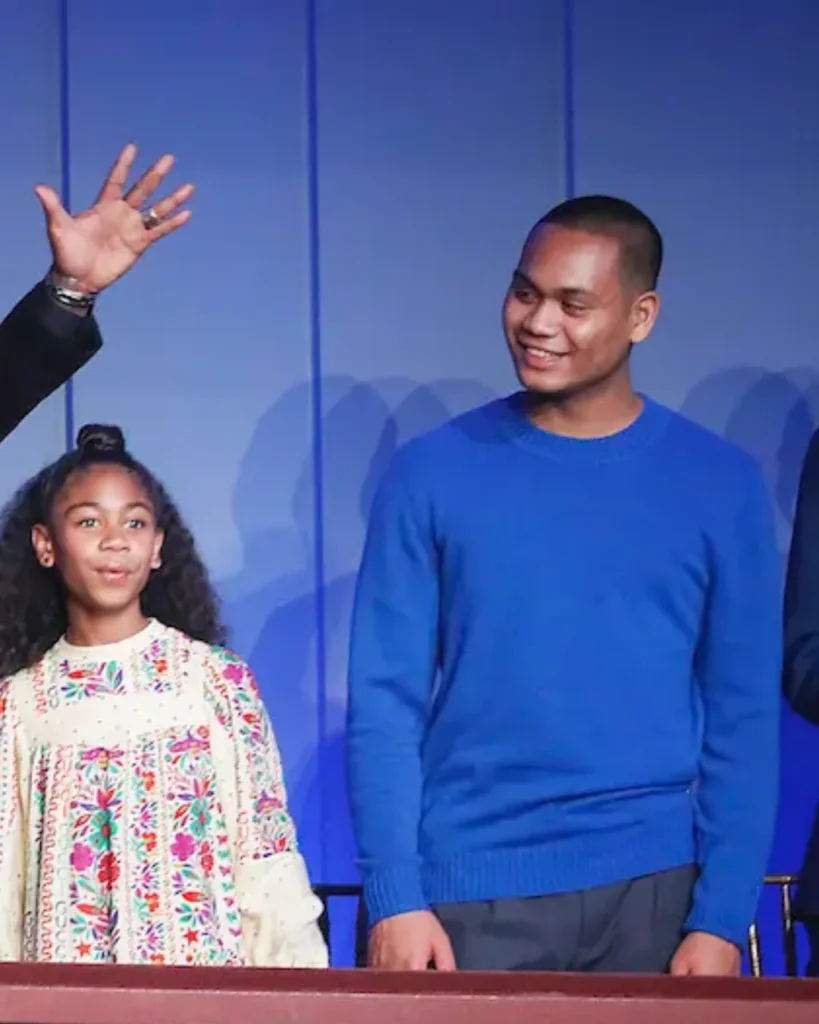
Who Is Dave Chappelle, and Why Did He Leave Fame Behind?
To understand Sulayman’s upbringing, context about his father is essential. Dave Chappelle, born David Khari Webber Chappelle on August 24, 1973, in Washington, D.C., is widely regarded as one of the greatest stand-up comedians of his generation. He began performing stand-up in nightclubs at age 14 and made his film debut at 19 in the 1993 comedy Robin Hood: Men in Tights. He spent the 1990s grinding through the New York comedy circuit, developing a voice that was sharp, culturally engaged, and willing to go places that mainstream television rarely permitted.
The Return to Stand-Up and the Netflix Years
Dave did not disappear permanently. By 2017, he had signed a landmark deal with Netflix for comedy specials, with each release reportedly earning him $20 million, according to Hollywood Life. His 2017 specials The Age of Spin and Deep in the Heart of Texas were immediately recognized as major works. Critics writing for publications including The New York Times praised his return as a reminder of what fully realized stand-up comedy could accomplish. Additional specials followed, including Sticks and Stones in 2019, which won the Grammy Award for Best Comedy Album.
His 2021 special The Closer generated significant controversy over jokes about transgender people. It was covered extensively by named publications including The Hollywood Reporter and The New York Times, and sparked a broader cultural debate about the limits of comedy. Netflix employees staged a walkout. The controversy ran for weeks across entertainment media. Throughout that entire period, his family remained entirely out of the public conversation. Sulayman, Ibrahim, and Sanaa were not cited, interviewed, or photographed in connection with any of it.
His most recent special, The Unstoppable, was released on Netflix on December 19, 2025, according to the Dayton Daily News, directly following the Jake Paul versus Anthony Joshua boxing match. The 75-minute show was filmed at Capital One Arena in Washington, D.C., and immediately drew attention for its wide-ranging observations on culture, politics, and identity. Yellow Springs and his life in Ohio featured prominently in the opening minutes. His family, as always, did not.
That consistency was not accidental. It was the system working exactly as the Chappelle parents had designed it for over two decades.
Early Life: Yellow Springs and the Farm
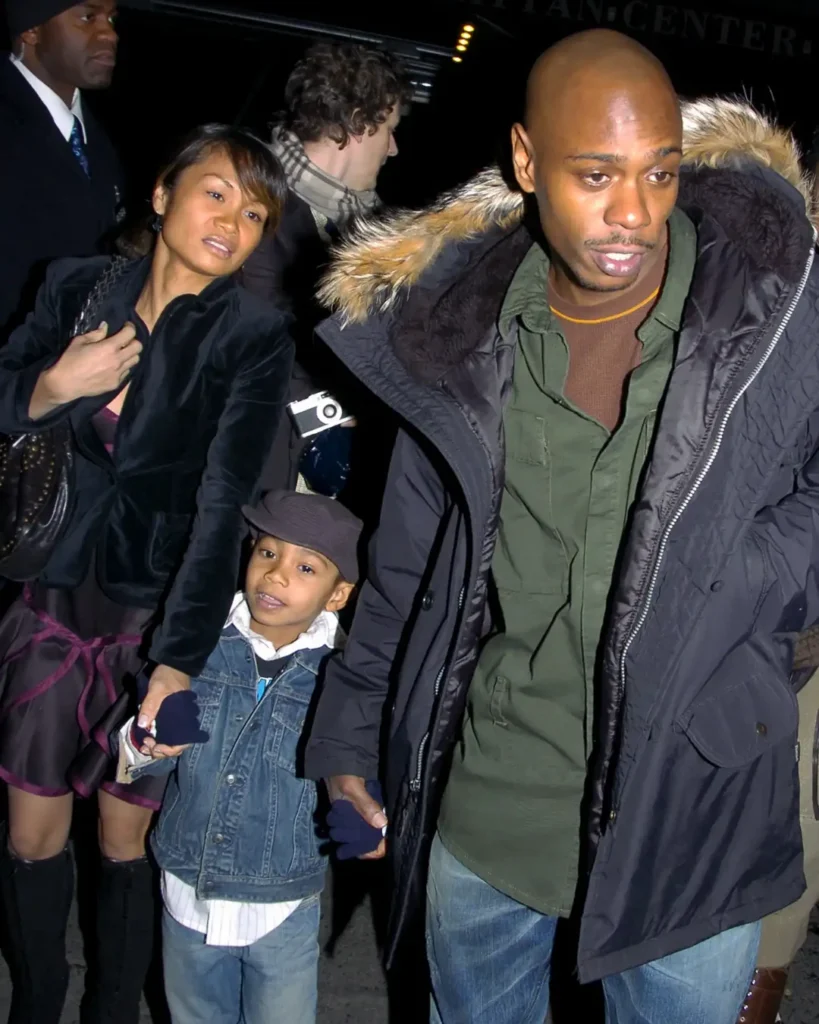
Sulayman Chappelle was born in 2001 in Washington, D.C. He is 25 years old as of 2026. His name, Sulayman, is the Arabic transliteration of Solomon, meaning “man of peace.” According to bentsmagazine.co.uk, Dave has jokingly referred to him by the nickname “David Del Rey” in his comedy routines, a small glimpse into the warmth and humor of their relationship.
When Sulayman was approximately five years old, his family left Washington, D.C., and relocated to Yellow Springs, Ohio. The move happened in 2006, the year after Dave’s departure from Chappelle’s Show. According to Parade, Dave purchased the family’s farm property in 2005. The farm spans 65 acres of farmland surrounded by fields and woods, according to reporting by biography.com. It is, as Dave described it to Time, a place where the ego goes quiet.
Yellow Springs is a small village in Greene County, Ohio, with a population of roughly 3,500 people. It has a long-standing reputation as an artistic and progressive community, historically associated with Antioch College. Dave’s own father, William David Chappelle III, was a statistician who later became a professor at Antioch College and lived in Yellow Springs. The town was not a random choice. It was a return to roots, a place where Dave had spent childhood summers and where he felt the pull of something real.
A Childhood Designed Around Normalcy
For Sulayman, growing up in Yellow Springs meant attending local schools without the weight of celebrity following him into the classroom. His parents made deliberate choices to keep their children away from public events, red carpets, and media coverage.
That absence is the point. Dave and Elaine Chappelle built a household where their children could be children. The farm life added a further layer of groundedness. Growing up on 65 acres in a small Ohio town, with animals, open space, and a community that regarded the family as neighbors rather than celebrities, gave Sulayman a relationship to ordinary life that most children of famous parents never develop.
According to CBS News reporting on a 2017 interview, Dave said: “Everything changed after I had children. I took my professional life more seriously. And I think, as a dude, I had more depth after I had kids.” His children were not accessories to his public persona. They were the reason his public persona was worth sustaining in the first place.
His Parents: Dave and Elaine Chappelle
Understanding Sulayman’s character requires understanding both parents. However, Elaine Mendoza Erfe Chappelle has shaped the Chappelle household in ways that are less visible but equally consequential.
Elaine was born on August 31, 1974, to Filipino parents and grew up in Brooklyn, New York, according to Parade. She and Dave met in New York City in the early 1990s when he was still an unknown comedian trying to build his career. According to Dave’s own account on The Howard Stern Show, he met her while working in Brooklyn. They married in 2001, the same year Sulayman was born.
The Interfaith Household
One detail about Sulayman’s upbringing that adds particular texture to his identity is the interfaith nature of his family home. Dave Chappelle converted to Islam in 1998, several years before marrying Elaine. Elaine practices Christianity. Their household is therefore one in which two different faith traditions coexist with mutual respect and without the conflict that popular assumptions about interfaith families often anticipate.
Sulayman practices Islam, following his father’s faith. The name Sulayman itself is an Islamic name, and the choice reflects Dave’s religious identity as much as it does his sense of his son’s character and destiny. Growing up in an interfaith home in a small Ohio town, with African-American and Filipino-American heritage on two sides, gave Sulayman a cultural and spiritual complexity that few people his age share.
That complexity does not appear to have created internal conflict. Every observable indicator suggests it produced a young man who holds his identity with quiet confidence rather than public declaration. He knows who he is. He does not need an Instagram account to confirm it.
Boxing: The Discipline That Defines His Daily Life
Among the few things publicly known about him, his passion for boxing stands out as the most consistently documented. Dave has referenced his son’s boxing training in his stand-up material, and those mentions provide some of the clearest verified glimpses into Sulayman’s life outside the family farm.
The choice to train there, rather than at a local gym in Ohio, signals a level of seriousness about the sport that goes beyond casual interest. Traveling to Hollywood to train at a world-class facility means an investment of time, money, and commitment from both Sulayman and his family. According to osvira.com, he built foundational skills under coaching connected to the Manny Pacquiao camp, focusing on footwork, defensive tactics, and punch combinations. The same source notes that by 2024, he had participated in over 20 sanctioned amateur bouts, posting a record of 16 wins and 4 losses, and had earned two regional junior titles. Those are not casual numbers. Twenty sanctioned bouts represents years of consistent competition across structured events, and a 16-4 record at the regional level reflects a fighter who wins consistently and has absorbed the specific education that competitive defeat provides.
What Boxing Provides Beyond the Physical
Boxing as a discipline offers more than physical conditioning. It produces specific qualities of character that other athletic pursuits do not replicate in exactly the same way. The sport requires solitary dedication, the ability to absorb failure without collapse, mental discipline under pressure, and a willingness to put the body through sustained discomfort in pursuit of incremental improvement.
For a young man growing up in the shadow of one of the most famous entertainers in America, those qualities have particular value. Boxing demands that you earn everything. Nobody in the ring cares whose son you are. Your footwork, your reflexes, your conditioning, and your composure under fire are the only things that matter. The sport provides a space where he is not Dave Chappelle’s son. He is simply a fighter working to get better.
That dynamic, a private identity earned through physical discipline rather than inherited through family name, likely explains a significant portion of his sustained commitment to the sport. It is his own territory.
Poetry and Writing: The Creative Life Behind Closed Doors
Less widely reported but equally revealing is Sulayman’s interest in writing and poetry. According to osvira.com, he has maintained approximately 150 handwritten poems and short stories in notebooks since 2016. His subjects reportedly span farm life, reflections on identity, and the particular experience of growing up as the son of a prominent figure. In mid-July 2025, Dave posted a family video on social media that included Sulayman reciting an original poem in his own voice. That moment was notable precisely because it was so unannounced.
That detail is striking. The creative impulse in the Chappelle family runs deep, and Sulayman appears to have inherited a version of it that is turned inward rather than outward.
Dave Chappelle himself has always treated comedy as a form of truth-telling rather than performance for its own sake. The idea that his eldest son writes poetry in notebooks that nobody reads is entirely consistent with that ethos. The work has value because of what it means to the person doing it, not because of how many people see it.
According to osvira.com, he briefly performed stand-up comedy in a family-related context in 2020, appearing in what was described as a Late Show family skit. The content involved stories about rural Ohio teenagers and chess. He stepped away from performance after two appearances to refocus on boxing and writing. That decision reinforces the picture of someone who tried a public-facing creative form and found it less suited to his temperament than the private disciplines he had already committed to.
The Notebooks as Portrait
The image of 150 handwritten notebooks is worth pausing on. That is a volume of creative work produced entirely outside any platform, any audience, and any professional context. It represents sustained creative practice maintained for nearly a decade by a young man with no evident ambition to publish or perform. It suggests someone who creates because it is necessary rather than because it is recognized. That is a rare quality at any age. At 25, in a culture that monetizes every private thought through social media, it is exceptional.
His subjects, farm life, identity, and what it means to be the offspring of a famous parent, suggest a level of self-awareness and reflective intelligence that his chosen public silence does nothing to communicate but everything to confirm.
Quick Facts at a Glance
| Detail | Information |
|---|---|
| Full Name | Sulayman Chappelle |
| Date of Birth | 2001 (exact date not publicly confirmed) |
| Age (2026) | 25 years old |
| Birthplace | Washington, D.C., USA |
| Raised In | Yellow Springs, Ohio |
| Ethnicity | Mixed (African-American and Filipino-American) |
| Religion | Islam |
| Father | Dave Chappelle (comedian, actor, writer, producer) |
| Mother | Elaine Mendoza Erfe (Filipino-American, homemaker) |
| Siblings | Ibrahim Chappelle (brother, born 2003), Sanaa Chappelle (sister, born 2009) |
| Known Interests | Boxing, poetry, writing |
| Training | Wild Card Boxing Club, Hollywood (from 2015) |
| Social Media | No verified public accounts |
| Name Meaning | Arabic form of Solomon, meaning “man of peace” |
The Chappelle Siblings: Ibrahim and Sanaa
Sulayman is the eldest of three Chappelle children. His brother Ibrahim was born in 2003 and is currently 22 years old. His sister Sanaa, also known publicly as Sonal, was born in 2009 and is 16 or 17 years old in 2026.
According to naijanews.com and Hollywood Life, Ibrahim shares some of the humor and entertainment interests that define his father’s career. Dave has mentioned in stand-up material that Ibrahim is a fan of comedian Kevin Hart, which has produced gently competitive observations in Dave’s routines about the changing loyalties of his children as they grow older. The anecdote, funny on its surface, also reveals something real about how the Chappelle household works. The children have their own tastes, their own opinions, and their own capacity to disagree with their father’s aesthetic preferences. That independence is a marker of healthy development.
Sanaa Chappelle attracted a small degree of public attention by appearing briefly in the 2018 film A Star Is Born, the Bradley Cooper and Lady Gaga musical drama. She appeared alongside her father in a small role. That appearance, while minor, suggests an early interest in acting and a comfort in front of a camera that distinguishes her trajectory from her brothers’. She is still a teenager in 2026 and any assessment of her long-term direction would be premature.
Three siblings
Each has found different outlets for those values. Sulayman has boxing and poetry. Ibrahim has comedy appreciation and academic life. Sanaa has early acting interest and an apparent willingness to appear publicly that her older brothers do not share. None of them, as of 2026, maintains a public social media presence or has spoken to media independently.
The family unit that Dave and Elaine built is visible in how those three distinct individuals have grown. They are different from one another in temperament and interest. However, they share a groundedness and a sense of proportion about fame that most children raised in proximity to celebrity never develop. That shared quality does not come from a parenting manual. It comes from two decades of deliberate choices made by two parents who knew exactly what they were protecting their children from.
Why Privacy Is the Most Deliberate Choice the Chappelles Make
The absence of Dave’s eldest son from public life is not an oversight. It is a policy, consistently maintained across two decades of parenting by two people who understand exactly what public life costs. Dave Chappelle walked away from $50 million because he understood that cost personally. Elaine Chappelle has never pursued public attention at any level, despite being married to one of the most photographed entertainers in America.
Dave has spoken in his stand-up about the evolution of his relationship with his children as they have grown older. In his Netflix special Equanimity and The Bird Revelation, he described the shift from children running to greet his tour bus to children responding with bemused detachment: “Hey everybody, look: It’s Mr. Promises back from the road,” according to yen.com.gh. The moment is funny because it is honest. His children have their own lives, their own rhythms, and their own sense of humor about their father’s absences and returns.
That is exactly what healthy parenting in a famous household looks like. Sulayman’s ability to pursue boxing and poetry without a publicist, an Instagram account, or a brand partnership is the direct result of parents who decided that those things were not the point.
Yellow Springs as the Container
The town of Yellow Springs deserves recognition as a genuine factor in how the Chappelle children grew up. According to the Dayton Daily News, Dave has been an active and visible presence in the Yellow Springs community for more than two decades, participating in local conversations, occasionally hosting comedy shows at Wirrig Pavilion, and by his own account purchasing a significant portion of the town’s commercial property. In his December 2025 Netflix special, he joked that he has “bought most of” Yellow Springs, according to the Dayton Daily News.
Growing up in a community like that, surrounded by artists, academics, farmers, and ordinary Ohioans, gives children a reference point for what real life looks like that is distinct from the distorted mirror of celebrity culture. Sulayman grew up knowing that the world is not organized around fame. He grew up in a place where what you do every day matters more than what your surname is. He attended local schools with children whose parents were teachers, farmers, and small business owners. His classmates did not treat him as a celebrity’s son in the way that children in Los Angeles or New York might have. That ordinariness was not a limitation. It was a gift, deliberately given by parents who understood its value.
Where Things Stand in 2026: What Is Known and What Remains Private
As of 2026, Sulayman is 25 years old.
His estimated personal net worth is not publicly known and cannot be responsibly estimated. He is not known to have income-generating employment in any public-facing capacity. His father’s net worth is estimated at approximately $70 million by Celebrity Net Worth and biography.com. Sulayman benefits from growing up in a financially stable household. However, any specific claim about his personal finances would be speculation without a credible named source to support it.
At 25, most people with a famous parent are either struggling to emerge from beneath that shadow or actively leveraging it for financial and social shortcuts. Sulayman appears to have chosen a third path: simply living well on his own terms, in a town his family chose for its sanity, pursuing disciplines that demand everything from him personally and offer nothing to a public audience.
That path is harder than it looks. Fame is magnetic. The gravitational pull of a parent’s recognition, the shortcuts it offers, and the identity it can provide are real forces. Resisting them requires either indifference or a clear sense of self that is stronger than the pull. Indifference seems unlikely given the depth of commitment he has shown to boxing and writing. A clear sense of self, formed over two decades in a household that consistently modeled the difference between public success and private integrity, seems like the more accurate explanation. Everything observable about him suggests the latter.
Frequently Asked Questions
How old is Dave Chappelle’s eldest son in 2026?
Sulayman is 25 years old in 2026.
Who are his parents?
His father is comedian, actor, and writer Dave Chappelle, and his mother is Elaine Mendoza Erfe Chappelle, a Filipino-American who grew up in Brooklyn, New York. Dave and Elaine married in 2001.
Is Dave Chappelle’s son a boxer?
Yes. He has been training in boxing since approximately 2015, when he joined the Wild Card Boxing Club in Hollywood, one of the most respected boxing gyms in the world and the home gym of trainer Freddie Roach.
Does he have public social media accounts?
He does not maintain any verified public social media accounts on Instagram, TikTok, Twitter, or any other platform, according to multiple biographical sources. His family has consistently maintained privacy across all platforms.
Conclusion
Sulayman Chappelle’s story is a quiet one, which is precisely what makes it worth telling. In a media environment that rewards visibility, curation, and the deliberate performance of a self for public consumption, his choice to live without any of that is not a passive absence. It is an active decision, reinforced daily, that reflects a set of values absorbed from a family that has consistently chosen depth over breadth, meaning over recognition, and presence over performance.
His father walked away from $50 million and the most successful sketch comedy show in American television history because he understood something important about the relationship between public identity and personal integrity. His mother built a private family life on 65 acres of Ohio farmland, keeping herself entirely out of the spotlight while raising three children who know how to look at famous people without being dazzled by them. Together, Dave and Elaine made choices for their family that most people in their position do not make. Those choices were not costless. They required resisting enormous financial and social incentives. They required teaching children that the metrics of public life are not the metrics of a well-lived one.
Sulayman is the eldest product of that household.
Sulayman boxes because the ring asks everything of him and cares nothing for his last name. Those three facts together describe a person who knows what he values and organizes his time accordingly. That clarity is rare in any person. In a 25-year-old whose family name opens every door in the entertainment industry, it is genuinely remarkable.
The comparison worth making is to the many celebrity children who spend their twenties chasing the visibility their parents had, producing diminished versions of a legacy they did not earn. Sulayman has done the opposite. He has taken the inheritance of character that his parents built, the discipline, the privacy, the groundedness, the dual cultural identity, and applied it to pursuits entirely his own. Boxing and poetry have no obvious connection to stand-up comedy. They are not a continuation of his father’s career. They are his own thing, entirely, and that is the whole point.
At 25, with most of his adult life still ahead of him, the path he chooses from here is entirely open. Sulayman may pursue boxing seriously at a professional level. He may publish the poetry in those 150 notebooks someday. He may build a permanent life in Yellow Springs or move toward a different horizon as his interests evolve. What seems certain, based on everything that is observable about his choices so far, is that he will approach whatever comes next the same way he has approached everything so far: on his own terms, with quiet conviction, and without asking anyone to watch.