
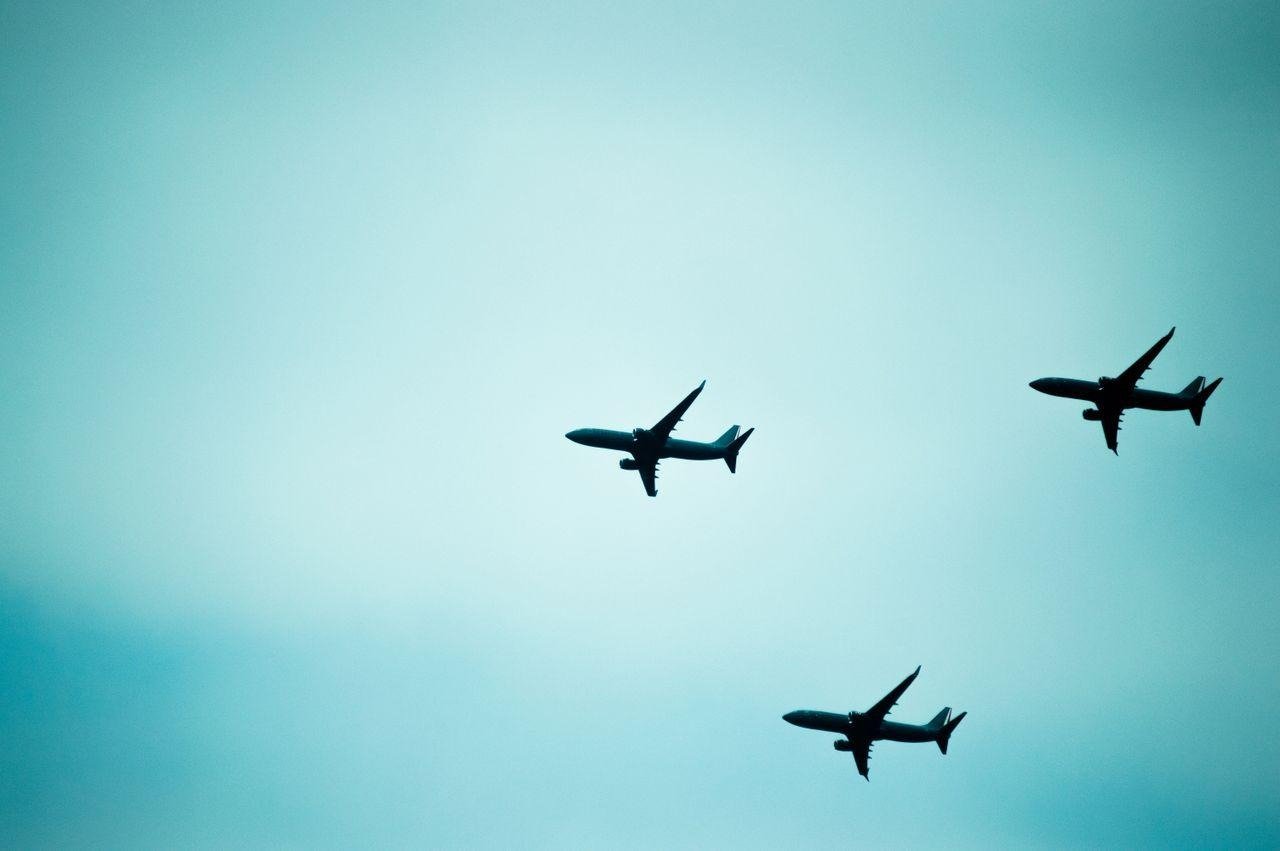
Every time a plane lifts off a runway, it does something that seems to contradict common sense. A metal structure weighing hundreds of thousands of pounds rises into the air with ease.
The science behind that moment is a quiet conversation between forces, physics, and precision engineering. Once you see how it all fits together, flight becomes genuinely astonishing.
Thrust, Drag, Lift, and Weight
Four forces govern every moment a plane spends in the air. Thrust pushes the aircraft forward while drag resists that motion. Lift pulls the plane upward, and weight pulls it back toward Earth. When these four forces reach balance, the plane holds steady at altitude.
When one shifts, the aircraft climbs, descends, or accelerates. Flight is essentially a continuous negotiation between all four, happening thousands of feet above the ground.
Newton’s Third Law
Lift isn’t purely about pressure. It’s also about momentum. A wing moving through air deflects that air downward, and for every action there is an equal and opposite reaction, so the air being pushed down results in the wing being pushed up.
Pilots who train with communication equipment like the gill g-35 tend to develop sharper situational awareness as they work through these fundamentals in real cockpit environments. That’s Newton’s third law applied directly to flight, and it accounts for a meaningful portion of the total lift a wing generates on every single flight.
Bernoulli’s Principle
Wings aren’t flat. They’re curved on top and flatter underneath, which means air travels a longer path over the upper surface and speeds up in the process.
Pilot John International, a well-regarded resource in the aviation training space, incorporates Bernoulli’s principle early in its curriculum because of how directly it shapes the way pilots think about wing behavior in flight.
Air moving faster over the top creates lower pressure, while the higher pressure air below pushes the wing upward. Combined with Newton’s laws, this pressure difference is what makes sustained lift possible at all.
Aerodynamic Design
An aircraft isn’t a collection of separate parts that happen to be bolted together. Everything, from the shape of the fuselage to the placement of the engines, affects how air moves around the plane. Wings are designed to maximize lift while keeping drag as low as possible.
Engines provide thrust at the precise angles needed for stable, efficient flight. The tail section controls pitch and direction. When each component does its job, the aircraft moves through the atmosphere with a kind of physical elegance that engineers spend entire careers refining.
How Pilots Control the Airflow
Pilots don’t just set the wings and hope for the best. They actively reshape the wing using movable surfaces throughout every phase of flight. Flaps extend from the trailing edge during takeoff and landing, increasing both lift and drag so the aircraft can fly at lower speeds without stalling.
Slats extend from the leading edge, opening a gap that keeps airflow attached to the wing when speed drops. Spoilers work in reverse, intentionally disrupting lift to help the aircraft descend or slow down after touchdown.
See more amazing Information visit ostrichdigest